
Factory Guide · Powder-Coating Quality
Powder Coated Tumblers for Bulk Orders: How to Verify Coating Quality
A color sample shows appearance. A reliable bulk-order decision also checks powder documents, production controls, the finished-tumbler test plan, and the reference kept for repeat orders.
Short answer
Verify powder coated tumblers through three connected layers: the powder supplier’s documents, the factory’s cleaning and cure controls, and a finished-tumbler test plan agreed for the order.
A TDS, SDS or batch document does not by itself prove that the finished cup will resist a dishwasher cycle. Temperature, time and line speed affect cure; dust control affects visible defects; and final acceptance must match the buyer’s actual claim and order requirements.
What evidence should a buyer request for powder coated tumblers?
One certificate or one attractive sample is not enough. Buyers need three connected forms of evidence, because each answers a different question about the order.
Identify the material, handling information and supplied batch reference.
Control cleanliness, application conditions, temperature, time and line speed.
Use the test plan and acceptance criteria confirmed for the order.
What do TDS, SDS and batch documents actually tell you?
Bluegreen commonly receives a technical data sheet (TDS), safety data sheet (SDS) and a batch document from the powder supplier. Buyers should ask which exact powder identity applies to the approved color and production lot instead of accepting a generic file with no link to the order.
| Document | Useful for | Does not prove by itself |
|---|---|---|
| TDS | Product-specific application guidance, recommended cure window, appearance or other technical properties supplied by the manufacturer | That the actual tumbler followed the stated process or passed the buyer’s durability requirement |
| SDS | Hazard, handling, storage, exposure and emergency information for the chemical product | Finished-cup coating performance, dishwasher durability or market-specific food-contact suitability |
| Batch document | Connecting the received powder to a supplier lot or batch reference | That every coated cup is visually identical or that the finished order has passed inspection |
An SDS is primarily a safety communication document, not a coating-performance certificate. Likewise, cure information in a TDS is an input to production control, not evidence that the finished cup was cured correctly.
How does the factory control dust before and during coating?
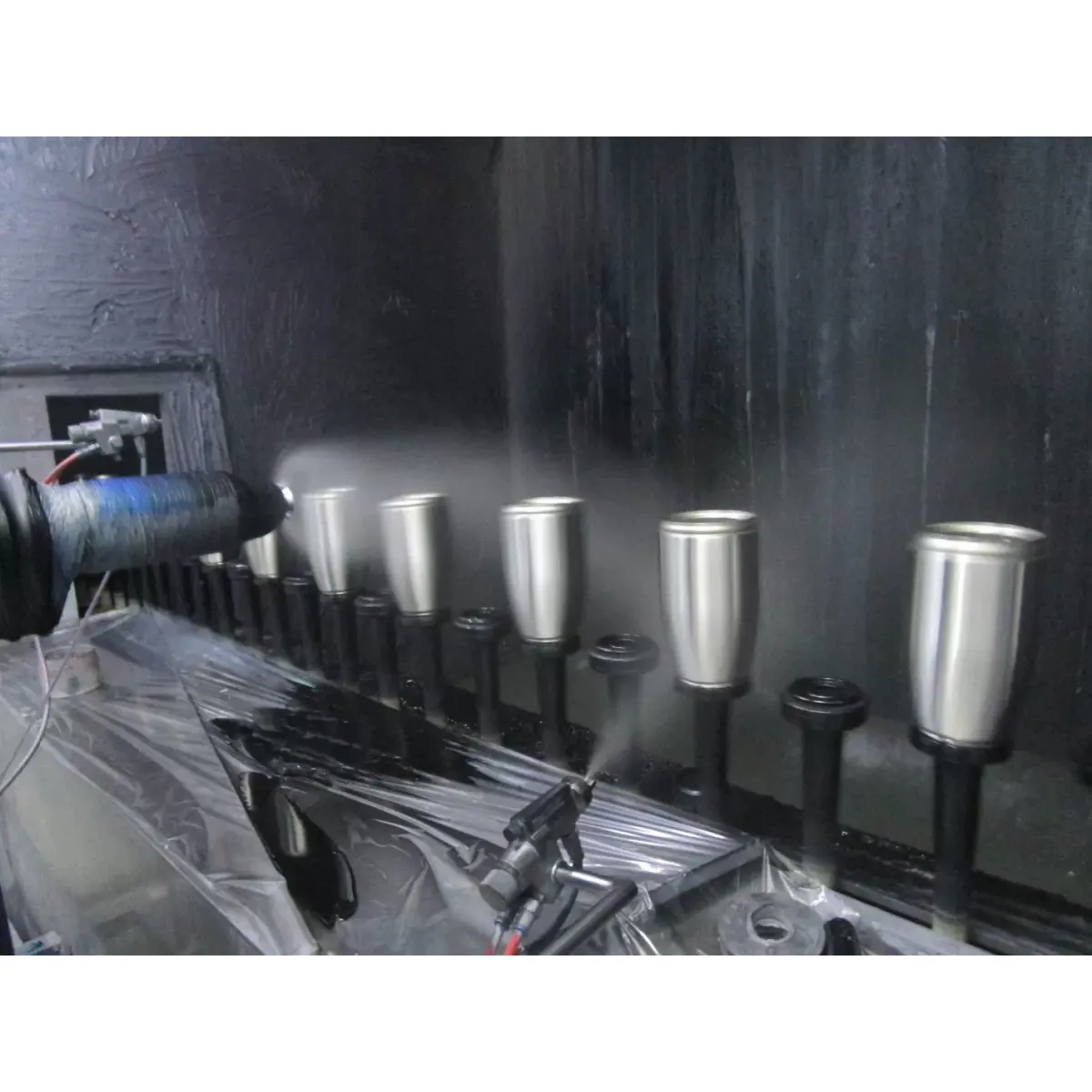
Visible particles can become trapped in the finish. Before coating, the work area is cleaned and an air gun removes dust that may remain on the cup body. This describes Bluegreen’s actual dust-control step; it does not imply a separate chemical pretreatment line.
Cleaning does not make the powder, equipment and operator settings irrelevant. Cup geometry, fixture movement, powder flow and application coverage still need to produce an even layer around curved walls, shoulders, handles and lower edges.

Buyers do not need to prescribe every machine setting. A more useful RFQ question is where the cup is cleaned, how coated and uncoated areas are controlled, and which inspection catches contamination before the order moves forward.
Why must temperature, time and line speed be controlled together?
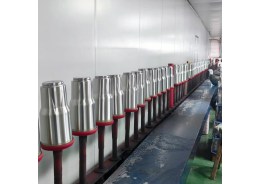
The three variables determine the heating exposure experienced by the coated cup. Temperature without enough time may not complete the intended cure, while changing line speed changes how long the product remains in the heating stage. The correct window depends on the selected powder and its technical guidance, so this article does not publish one universal temperature or time.
On a continuous line, a faster line can reduce exposure time and a slower line can increase it. An approved route should connect the powder identity with the actual temperature, time and line-speed settings rather than treating the oven as a simple on/off step.
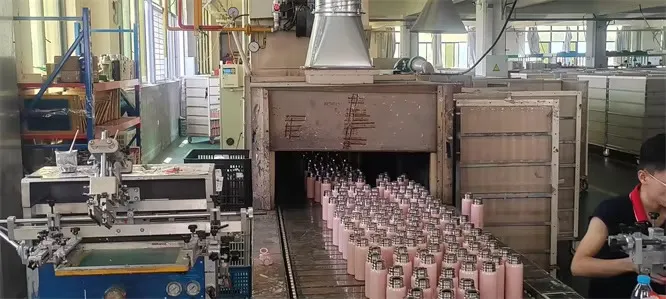
Powder manufacturers may define cure conditions using substrate temperature rather than oven-air temperature. Buyers requesting a formal process review should ask what temperature is being referenced and how the factory confirms that the approved route has not changed.
How should finished powder coated tumblers be tested?
The test plan should follow the customer’s order requirements and intended claim. Bluegreen does not apply one fixed dishwasher-cycle count to every project. The agreed method should identify the program or conditions, number of cycles, sample selection, evaluation points and acceptance decision.
Has the visible color changed beyond the approved comparison rule?
Has the finish become noticeably duller under the agreed viewing condition?
Are raised bubbles or localized lifting visible after exposure?
Has the coating separated at an edge, engraved area or body surface?
A report is not the same as a general statement that the factory normally uses powder capable of meeting dishwasher-related requirements. If a buyer requires a named laboratory method or third-party report, that scope, sample and cost should be confirmed before production.
When a cross-cut check is part of the agreed plan, ISO 2409 provides a method for assessing a coating’s resistance to separation after a lattice pattern is cut. ISO also states that this result is not a direct measurement of adhesion, so it should be reported as one defined check rather than treated as a complete durability verdict.
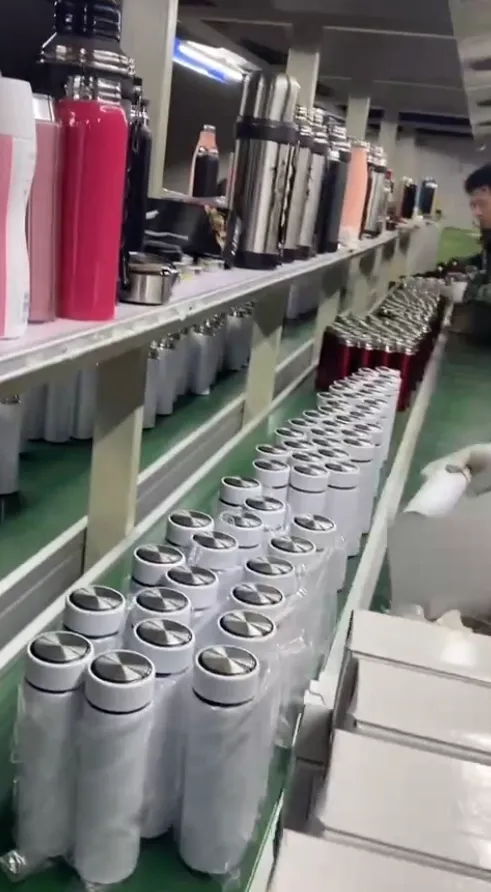
Visible line inspection is useful for color and surface appearance, but it cannot replace the agreed durability exposure. For a deeper discussion of failure modes, see the guide to powder quality, surface defects and dishwasher durability.
Does every coating defect mean the powder quality is poor?
No. Poor powder can be a major cause, but the investigation should also consider dust, application, cure and downstream handling. A visible symptom indicates where to investigate; it does not prove a single root cause on sight.
| Visible symptom | First investigation areas | Buyer evidence to review |
|---|---|---|
| Dust or raised particles | Work-area cleanliness, air cleaning, cup-body condition and booth contamination | Inspection photos, affected locations and lot scope |
| Fading or gloss loss | Powder selection, cure exposure, cleaning chemistry and test conditions | Approved sample, test plan and before/after comparison |
| Blistering | Surface condition, contamination, trapped material and heating route | Defect map, process review and trial result |
| Peeling or separation | Powder suitability, surface cleanliness, cure and damage at edges or later operations | Location, handling history and agreed separation or durability check |
| Uneven appearance | Application coverage, geometry, fixture movement, powder flow and viewing conditions | Production sample, boundary sample and line inspection record |
That distinction matters: the affected lot should be isolated and the failure reproduced before either side concludes that the powder alone caused it.
What happens when a coated batch does not meet the requirement?
If a coated batch misses the requirement, Bluegreen isolates it first. The team then analyzes the problem, chooses rework or remaking, reinspects the result, and releases the batch only when the agreed acceptance requirements are met.
- Isolate: prevent affected units from moving into packing or shipment.
- Analyze: map the symptom, quantity and likely material, cleaning, application, cure or handling factors.
- Choose the route: decide whether stripping and recoating, another controlled rework, or remaking is appropriate.
- Reinspect: repeat the relevant appearance and durability checks after corrective work.
- Release: document the decision against the order’s agreed acceptance basis.
Recoating is not described here as automatically causing an uneven finish. Acceptability depends on the defect, stripping and preparation route, product condition, new application and final inspection. The supplier should not promise the route before analyzing the actual batch.
How can a repeat order match the previous coating?
A retained physical sample and the previous order requirements provide the practical starting point. Bluegreen keeps a sample and uses the earlier order as the production reference when the customer returns.
The factory does not claim that every process and powder-batch record is retained indefinitely, because the timing of a customer’s next order cannot be guaranteed. Buyers with strict long-term traceability needs should state the required retention period, document set and repeat-order tolerance in the original purchase agreement.
A retained sample can change if exposed to light, dirt or handling. Store it carefully, identify the order and date, and confirm whether the new order will be approved against the sample, an instrument reading, or both. The color sample approval guide explains how to establish that reference.
What should be written into a bulk-order coating brief?
| Decision | Information to confirm |
|---|---|
| Product | Cup model, capacity, metal construction, handle or accessory configuration and revision |
| Coating appearance | Color reference, texture, gloss, coated zones, masked zones and approved sample |
| Powder evidence | Required TDS, SDS, batch reference and any project-specific declaration |
| Production route | Cleaning boundary, application route, cure variables and change-control expectation |
| Finished-cup verification | Customer test method, cycles or exposure, sample plan, fading, gloss-loss, blistering and peeling criteria |
| Logo and packaging | Decoration process, sequence, rub protection, inner pack and carton arrangement |
| Nonconformance | Isolation, analysis, rework/remake authority, reinspection and release responsibilities |
| Repeat order | Retained sample, record-retention requirement, tolerance and reapproval trigger |
Use Bluegreen’s powder-coating service page to review the finish route. If the project is still choosing between liquid paint and powder, compare the spray painting versus powder coating guide. Final inspection scope can then be aligned with the custom drinkware quality-control guide.
Frequently asked questions
Does an SDS prove that powder coated tumblers are dishwasher safe?
No. An SDS communicates chemical hazard, handling and safety information. Dishwasher durability must be evaluated on the finished tumbler using the test plan and acceptance criteria confirmed for the order.
What powder coating documents should a bulk buyer request?
Depending on the project, request the applicable TDS, SDS and supplier batch reference. Link each document to the powder used for the approved color and order, while recognizing that documents do not replace process control or finished-product testing.
What controls powder coating cure on a tumbler production line?
Temperature, exposure time and line speed must be controlled together. The appropriate window depends on the selected powder and product route, so buyers should not apply one generic temperature or time to every coating.
How many dishwasher cycles should powder coated tumblers pass?
There is no single Bluegreen cycle count for every order. The program, conditions, number of cycles, sample selection and acceptance criteria are confirmed according to the customer’s project and intended claim.
Can a failed powder coating batch be reworked?
Potentially. The batch is isolated and analyzed before deciding whether stripping and recoating, another rework route or remaking is appropriate. The corrected product must pass the relevant reinspection before release.
What should be checked after a dishwasher test?
For the confirmed factory scope in this guide, evaluation includes fading, gloss loss, blistering and peeling. The buyer should define comparison conditions and acceptance criteria before the test begins.
References and further reading
- ISO 2409:2020 — Paints and varnishes — Cross-cut test — Official scope: resistance to separation, not a direct measurement of adhesion; applicability limits must be checked.
- OSHA Appendix D to 29 CFR 1910.1200 — Safety Data Sheets — Used to distinguish safety communication from finished-coating performance evidence.
- TIGER Drylac Series 29 — Application and curing conditions — Manufacturer example showing that cure conditions depend on the powder and use substrate temperature and curing time; not a Bluegreen specification.
Define the coating evidence before approving production
Send the tumbler model, target color and texture, logo, quantities by color, required powder documents, finished-cup test plan, packaging and repeat-order expectations. Bluegreen can review what belongs in the sample approval and bulk production brief.
This guide provides general B2B sourcing information, not legal or laboratory advice. Confirm market-specific requirements, test methods, and acceptance criteria with qualified professionals before production.



 English
 German
 French
 Russian
 Spanish
 Japanese
 Korean
 Portuguese
 Ukrainian
 Arabic
 Italian

Leave A Comment