
Bulk Tumbler Cost Guide
Why Custom Tumbler Prices Vary: A B2B Cost Breakdown for Bulk Orders
A low unit quote can become expensive after decoration, packaging, inspection, and delivery are added. Compare quotations only after every supplier prices the same specification.
Short answer
Custom tumbler prices vary because the quote covers much more than a metal or plastic cup. The main cost drivers are product structure, material and gauge, lid and accessories, finish, decoration, order quantity, testing and inspection, packaging, and delivery terms.
The right comparison is not the lowest unit price. It is the lowest total cost for the same approved product, quality plan, packaging, quantity, delivery point, and responsibility split.
Eight cost drivers behind a custom tumbler quote
| Cost driver | What changes the quote | Buyer risk if omitted |
|---|---|---|
| Product structure | Capacity, wall construction, shape, handle, lid, straw, and accessory count | Quotes may refer to different models that only look similar. |
| Material | Stainless grade, plastic resin, titanium specification, gauge, and component coverage | A broad material label can hide different bills of materials. |
| Finish | Powder coating, spray painting, polishing, gradient, rubber paint, or bare metal | Setup, curing, yield, color control, and durability differ. |
| Decoration | Method, colors, area, locations, registration, and artwork changes | A one-color logo is not priced like full-wrap artwork. |
| Quantity | Units per color, logo, model, and packaging version | Total quantity may not equal the economic batch size of each variation. |
| Quality plan | Functional tests, sampling, third-party inspection, and required records | Testing requested after production becomes a delay or surcharge. |
| Packaging | Individual box, insert, barcode, carton, pallet, and drop-test requirement | A cheap product quote can exclude costly retail-ready packing. |
| Delivery terms | Incoterm, named place, freight mode, duty, insurance, and destination work | FOB, DDP, and EXW prices are not comparable totals. |
Structure and material set the cost baseline
Start with the exact model. A single-wall plastic cup, double-wall stainless tumbler, vacuum flask, and titanium bottle use different materials, processes, tooling, cycle times, and inspection points. Even within one category, capacity, wall gauge, neck geometry, handle construction, lid complexity, and included accessories change the baseline.
Specify material by component rather than with a vague phrase such as “food-grade cup.” For stainless drinkware, identify inner wall, outer shell, and relevant metal accessories. For plastic drinkware, identify each food-contact resin and colorant. For titanium, state the material designation and which parts use it. The finished article still requires market-appropriate review; a raw-material name is not a complete compliance statement.
A change that appears small can affect more than material usage. A different lid may require new injection-molded parts, gaskets, assembly operations, packaging depth, and leak tests. Buyers should compare the whole approved structure.
Finish and decoration change setup, yield, and inspection
A color request is not complete without a finish. Powder coating, spray painting, rubberized coating, gradient paint, polishing, and sublimation have different appearance, design limits, process controls, and durability checks. Custom colors can also require color matching, sample rounds, line cleaning, and minimum batch sizes.
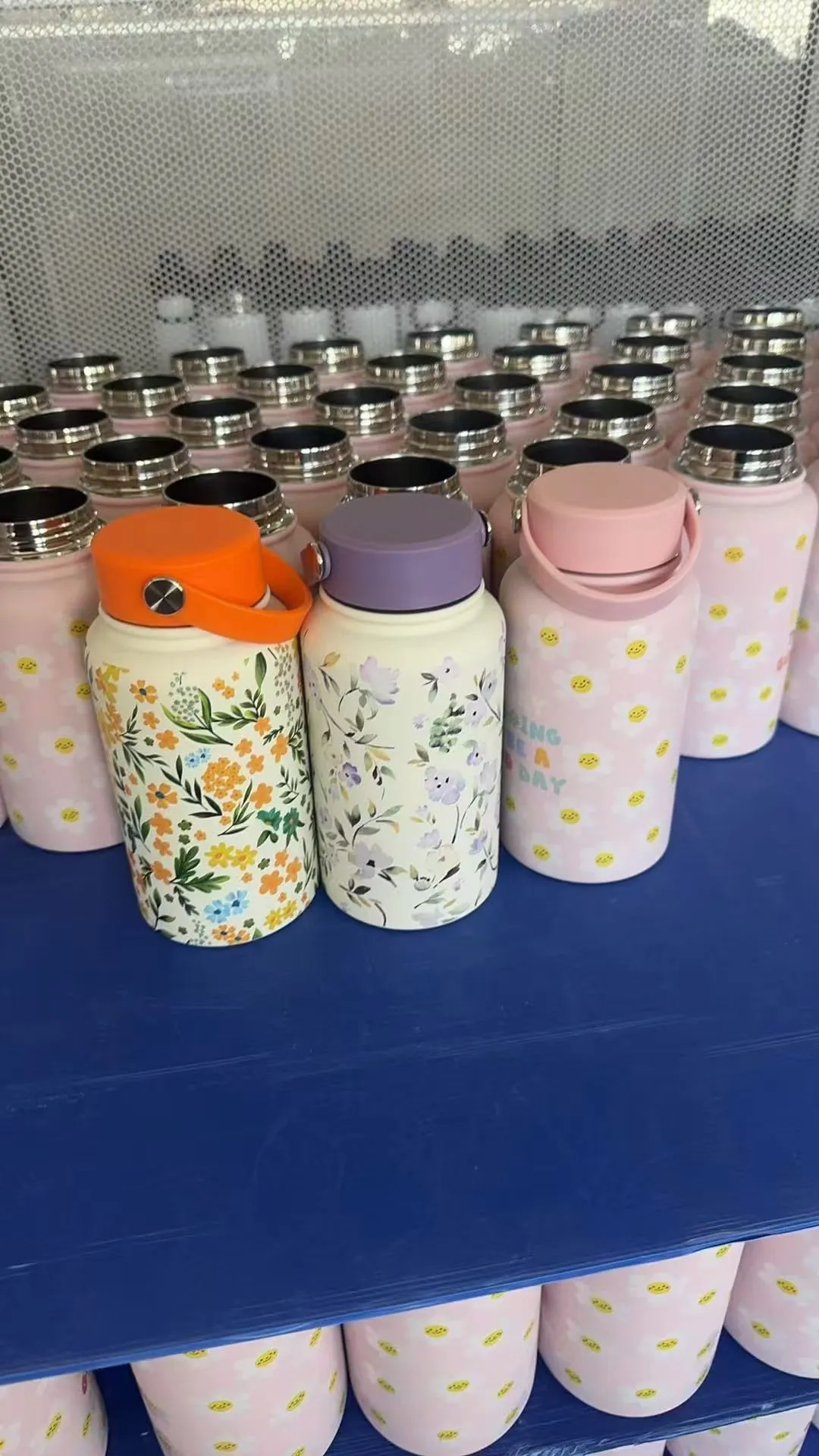
Logo pricing depends on the method and artwork: screen printing, laser engraving, UV printing, sublimation, water transfer, or other decoration routes cannot be compared by logo size alone. State color count, print area, number of positions, required opacity, registration tolerance, and whether variable names or barcodes are included.
Review available custom drinkware finishes and decoration services, then ask suppliers to quote the same route. If the final method is undecided, request separate options instead of allowing each supplier to make a different assumption.
How quantity and MOQ affect unit price
MOQ is model-specific at Bluegreen and should be confirmed in the quotation. The economic batch is often driven by more than the total order quantity. Splitting one order among four colors, three logos, or two packaging languages creates smaller production lots with additional changeovers and approvals.
The commercial order size across all variants.
Each body, capacity, and lid combination.
Each coating or molded-color batch.
Each logo, language, barcode, or packaging version.
Higher volume can spread tooling, setup, sample, line change, and inspection costs, but it also increases inventory and quality exposure. Ask for price breaks at quantities you can realistically sell, not a volume chosen only to reach the lowest unit figure.
Hidden costs that appear after the unit quote
The most common quote gaps are sample charges, mold or fixture cost, artwork setup, custom color development, replacement packaging, third-party testing, pre-shipment inspection, palletization, freight, duty, and correction of buyer-supplied artwork. None is automatically unreasonable; the problem is discovering it after approval.
- Sample stage: prototype, existing sample, custom sample, courier, and the number of revision rounds.
- Tooling: ownership, life, storage, maintenance, and conditions for transfer or remake.
- Quality: test method, laboratory, sample selection, inspection point, and failure response.
- Packaging: dieline, print plates, insert, master carton, marks, barcode, and pallet specification.
- Logistics: Incoterm and named place, freight validity, destination charges, duty, and tax responsibility.
How to compare custom tumbler quotations fairly
Use a comparison sheet with one row for every requirement and one column for each supplier. Mark included, excluded, optional, assumed, and pending items. A supplier that exposes costs and conditions may appear higher than one that leaves them blank, but the transparent quote is usually easier to control.
- Freeze one product and component specification for all bidders.
- Request separate prices for optional materials, finishes, or packaging instead of blended assumptions.
- Compare quantities per variant and the model-specific MOQ.
- Normalize currencies, tax treatment, Incoterms, and named delivery point.
- Add sample, tooling, testing, inspection, packaging, freight, and expected rework exposure.
- Record quote validity, payment terms, production lead time, and what starts the lead-time clock.
Bluegreen’s production lead time is typically about 7–35 days depending on the product, quantity, customization, and confirmed plan. Treat that as a planning range, not a promise for every order. The approved sample, artwork, deposit, materials, packaging, and inspection requirements must be settled before the exact schedule is confirmed.
RFQ fields that produce a decision-ready price
| RFQ group | Details to send |
|---|---|
| Market and use | Sales countries, buyer type, beverage use, product claim, and compliance needs |
| Product | Model, capacity, dimensions, materials by component, lid, handle, straw, and accessories |
| Visual | Finish, color reference, logo file, decoration method, size, position, and tolerances |
| Quantity | Total units and units per model, color, artwork, and packaging language |
| Quality | Golden sample, functional tests, sampling, inspection, records, and remedies |
| Packaging | Individual pack, insert, barcode, carton, marks, pallet, and retail requirements |
| Commercial | Target date, Incoterm and place, payment expectation, freight mode, and quote validity |
Use the detailed custom drinkware RFQ checklist or send the completed specification through Bluegreen’s custom project form. The goal is not to request “best price”; it is to make every supplier price the same decision.
Frequently asked questions
What is the biggest driver of a custom tumbler price?
There is no single universal driver. Product structure and material set the baseline, while finish, decoration, variant count, quality requirements, packaging, and delivery terms can substantially change the final project cost.
Why does the unit price fall at higher quantities?
Tooling, setup, color matching, line change, sample, and inspection costs can be spread across more units, and production may run more efficiently. The saving depends on units per model, color, logo, and packaging version—not only the total order.
Does a low MOQ mean the supplier is cheaper?
Not necessarily. A low MOQ may carry a higher unit price, use stock components, limit custom options, or exclude setup and packaging costs. Compare the final approved specification and total landed responsibility.
What should be included in a wholesale tumbler quote?
The quote should identify the model, material, finish, decoration, quantity and variants, packaging, sample and tooling charges, test and inspection scope, lead time, payment terms, Incoterm, named place, validity, and exclusions.
Can Bluegreen give one standard MOQ and lead time?
No single figure applies to every product. MOQ is model-specific, and production commonly ranges from about 7 to 35 days depending on the product, quantity, customization, approvals, and confirmed production plan.
References and further reading
- ICC Incoterms® 2020 checklist — Official ICC overview for defining delivery and risk terms.
Request a quote that can actually be compared
Send the model, materials, lid and accessories, finish, artwork, quantities by variant, packaging, quality requirements, delivery term, and target date.
This guide provides general B2B sourcing information, not legal or laboratory advice. Confirm market-specific requirements, test methods, and acceptance criteria with qualified professionals before production.


 English
 German
 French
 Russian
 Spanish
 Japanese
 Korean
 Portuguese
 Ukrainian
 Arabic
 Italian

Leave A Comment