
Powder-Coating Quality Guide for Custom Tumbler Buyers
How Powder Quality Affects Custom Tumbler Surface Defects and Dishwasher Durability
A powder supplier document supports material selection, but it cannot prove how a finished tumbler will behave after pretreatment, spraying, curing, decoration, packing, and repeated dishwasher exposure.
Short answer
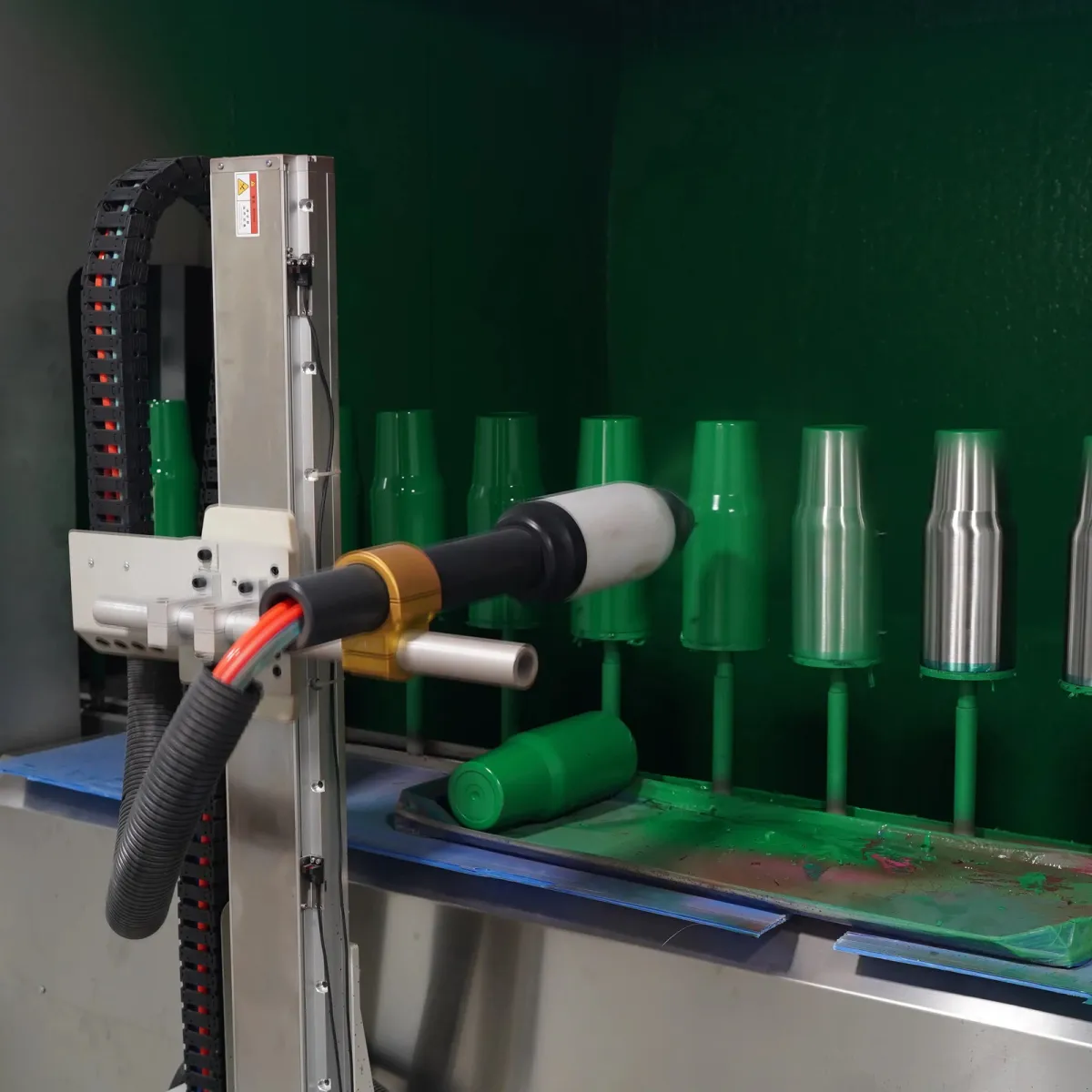
Poor-quality or unsuitable powder can contribute to pinholes, craters, rough texture, colour inconsistency, weak adhesion, and early durability loss, but powder is only one part of the coating system. Cleaning, pretreatment, storage, compressed air, film thickness, geometry, and time at the required metal temperature can produce similar symptoms.
Use two evidence layers for bulk orders: supplier documentation for the selected powder grade and a finished-cup test under the buyer's confirmed dishwasher conditions. The second layer matters because the dishwasher exposes the complete manufactured product—not an unopened box of powder.
Why powder quality matters but cannot explain every coating failure
In Bluegreen's production experience, poor-quality or unsuitable powder is the main material-side suspect when the same surface defects or weak wash durability recur. That differs from saying every pinhole or peeling complaint proves the powder was bad. The finished coating is a chain, and several links can create similar evidence.
Oil, residue, water, roughness, welds, and handling affect the base.
Cleaning, rinsing, conversion, drying, and contamination influence adhesion.
Grade, formulation, particle distribution, storage, compatibility, and consistency matter.
Grounding, settings, film build, geometry, metal temperature, and time determine the film.
Decoration, detergent, heat, water, drying, and cycles challenge the complete cup.
The Powder Coating Institute states that adhesion depends heavily on substrate cleanliness, suitable and maintained pretreatment, and proper melt and cure. Its technical material treats raw materials, application, and curing as interacting sources of common defects.
A supplier certificate is useful material evidence. It does not replace process records or finished-product testing.
What ‘powder quality’ should mean in a purchase and production record
The phrase ‘good powder’ is too vague for a purchase order. Confirm the approved manufacturer, grade, colour and finish, technical data, intended substrate and exposure, batch traceability, storage limits, and any customer-specific performance expectation.
Right chemistry for the use
Match substrate, appearance, cure equipment, market, handling, and durability—not colour alone.
Controlled application behaviour
Particle distribution affects fluidisation, transport, charging, deposition, build, efficiency, and smoothness.
Protected storage
Heat, moisture, contamination, expired storage life, or uncontrolled reclaim can change behaviour.
A batch that can be investigated
Connect powder lot, storage, line issue, colour changeover, recovery ratio, and product lot.
The Powder Coating Institute FAQ notes that particle-size distribution affects fluidisation, transport, charging, deposition, build rate, transfer efficiency, penetration, wraparound, and film smoothness.
Bluegreen uses powder grades supported by relevant supplier raw-material or grade documentation. Those records describe the powder within their stated scope; they do not certify every cup made from it.
How application, film thickness, and curing can imitate a powder problem
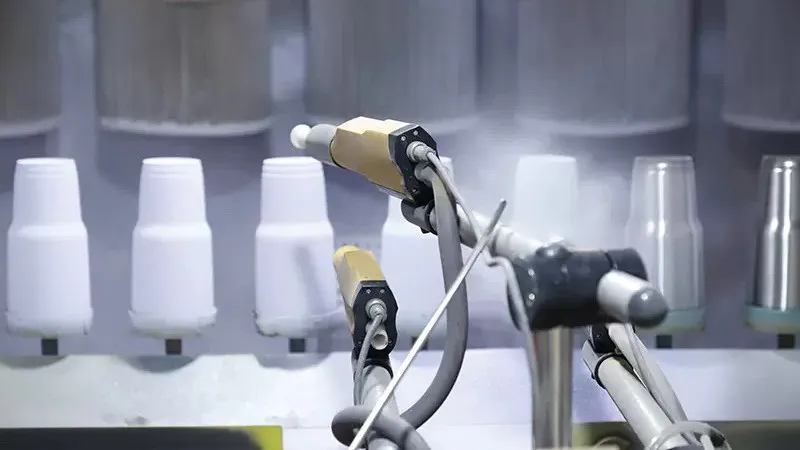
A stable powder can produce unstable results outside its process window. Moist or oily compressed air, poor grounding, unsuitable gun settings, inconsistent delivery, excessive reclaim, uneven geometry, or uncontrolled film build can change coverage and appearance before the oven.
Curing should be evaluated at the metal part, not only from displayed oven-air temperature. The powder supplier's required combination of metal temperature and time must be achieved on the workpiece. Different sections and oven loads may not heat identically.
The TIGER Drylac troubleshooting guide lists thickness variation, overcuring, different curing conditions, contamination, and fresh-versus-reclaimed powder changes among possible causes of shade, gloss, and surface deviations.
Do pinholes, fisheyes, bubbles, and colour shifts identify one root cause?
No. A symptom narrows the investigation but rarely names one cause. Preserve passed and failed samples, map the pattern across parts and positions, and avoid changing several variables at once.
| Symptom | First evidence to review | Do not conclude yet |
|---|---|---|
| Pinholes or bubbles | Surface cleanliness and moisture, emissions, powder condition, compatibility, thickness, and cure profile | That appearance alone proves poor powder |
| Fisheyes or craters | Oil or silicone, compressed air, booth cleaning, incompatible powder, conveyor or oven contamination | That more film will remove the source |
| Orange peel or roughness | Powder flow, film build, grounding, settings, substrate profile, heating rate, and cure | That texture fails without an approved limit |
| Colour or gloss variation | Thickness map, oven zones, cure, line stops, reclaim ratio, powder batch, and reference | That the colour master controls the process |
| Peeling or weak adhesion | Cleaning, pretreatment, retained residue, cure, film build, handling, and test method | That powder paperwork certifies cup adhesion |
| Change after dishwasher cycles | Recorded cycles, detergent, heat, drying, reference, edges, decoration, adhesion, colour, gloss, and cracking | That one model validates every coating system |
Axalta's powder-coating troubleshooting guidance lists cleaning, moisture, thickness, substrate features, incompatible powders, compressed-air contamination, cure conditions, and powder grade as possible contributors.
When several settings change at once, a cleaner-looking sample can hide the original cause. Preserve the failed condition and record what changed.
Why supplier documents and finished-cup dishwasher tests answer different questions
A powder data sheet or supplier report supports material selection. A dishwasher result applies to the tested finished-product configuration and recorded conditions. Neither should be described as broader than it is.
Powder supplier evidence
Supplier, grade, technical properties, cure recommendation, storage conditions, and declared scope.
Production traceability
Powder lot, surface preparation, air, application, thickness, metal-temperature cure, checks, and lot.
Customer-defined dishwasher validation
The completed cup is tested under recorded conditions and acceptance criteria.
Bluegreen uses both material documentation and finished-cup dishwasher cycle testing according to confirmed customer requirements. Production traceability is the bridge connecting a passed sample with a bulk lot.
The test record should identify model, substrate, powder system, colour, finish, decoration, samples, method or machine, programme, detergent condition, cycle count, drying, inspection timing, acceptance criteria, and result.
What dishwasher durability can reveal—and what it cannot
Repeated dishwasher exposure may reveal adhesion loss, blistering, cracking, colour or gloss change, edge weakness, or interaction with decoration that a short visual inspection does not show.
A pass under one customer's definition cannot become ‘dishwasher safe forever,’ nor automatically validate another powder chemistry, colour, pretreatment, cup geometry, decoration, process, or loading arrangement.
| Test field | What to record |
|---|---|
| Product | Model, material, powder system, colour, finish, decoration, included components, and sample quantity |
| Exposure | Machine or method, programme, water and drying conditions, detergent, orientation, cycle count, and interruptions |
| Reference | Approved sample, untested control, colour or gloss reference, photos, and pre-test condition |
| Acceptance | Peeling, blistering, cracking, adhesion, colour or gloss change, corrosion, decoration, edges, and limits |
| Traceability | Powder and production lots, cure record, dates, sample IDs, deviations, result, and approval authority |
If the RFQ only says ‘must pass dishwasher test,’ the factory lacks the conditions needed to price, sample, test, and accept the order. Agree the test contract before mass production.
What buyers should control before powder-coated tumbler production
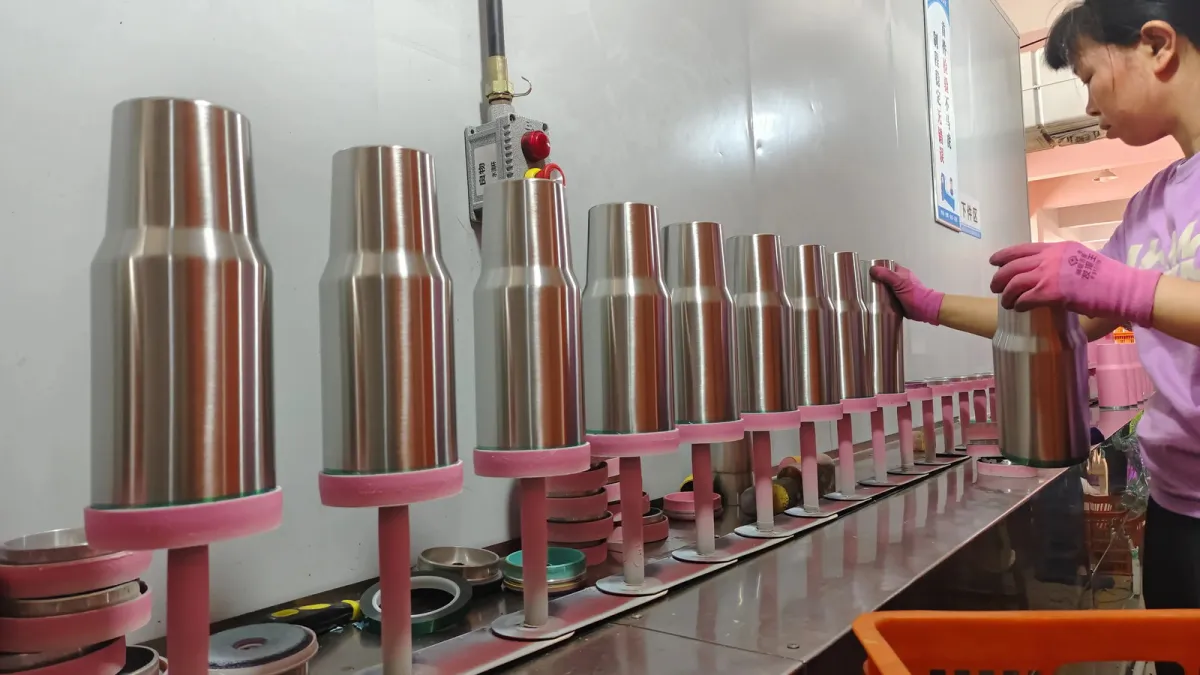
Use Bluegreen's custom drinkware quality-control guide with the colour sample approval guide. The powder-coated tumbler buyer guide covers broader sourcing, while the spray versus powder coating guide helps select the finishing route.
MOQ remains model-specific. Typical production lead time is approximately 7–35 days depending on product, quantity, colour, coating system, decoration, packaging, approval, validation, and the confirmed plan. Customer-specific testing can affect the schedule.
How Bluegreen validates a powder-coated tumbler programme
Bluegreen manufactures stainless steel, plastic, and titanium drinkware through its own production processes. For powder-coated stainless steel tumblers, the review matches intended market and use to cup structure, powder, colour, finish, decoration, quantity, and evidence.
Bluegreen retains supplier-provided powder material or grade documentation where applicable and performs finished-cup dishwasher cycle tests according to confirmed customer requirements. The quotation should define what is tested and what constitutes a pass; it should not rely on a generic ‘dishwasher-safe powder’ statement.
Send the model, target market, use, colour and finish, decoration, quantity, dishwasher claim or method, cycle conditions, acceptance criteria, packaging, and deadline. Bluegreen can review the evidence through its custom drinkware development process.
Frequently asked questions
Is poor powder quality the main cause of tumbler coating defects?
In Bluegreen's production experience, poor-quality or unsuitable powder is the main material-side cause to investigate when defects or weak dishwasher durability recur. Similar symptoms can also come from pretreatment, contamination, compressed air, film thickness, application, substrate condition, or curing.
Does a powder supplier report prove the finished tumbler is dishwasher safe?
No. Supplier documentation supports the powder grade within its scope. A finished tumbler adds preparation, thickness, curing, geometry, decoration, assembly, and handling, so dishwasher performance should be validated on the completed product.
What causes pinholes or bubbles in powder-coated tumblers?
Possible causes include substrate residue or moisture, trapped emissions, contaminated or incompatible powder, excessive thickness, compressed-air contamination, surface cavities, and unsuitable heating or cure conditions.
Can undercuring make a powder-coated tumbler fail dishwasher testing?
It can contribute because the powder must reach its specified combination of metal temperature and time. A failure still requires review of pretreatment, film build, contamination, geometry, and test conditions.
How many dishwasher cycles should a custom tumbler pass?
Bluegreen does not apply one universal count to every product and claim. Buyer and supplier should agree the product, method, programme, detergent, cycle count, drying, loading, inspection, and pass criteria before production.
What should a buyer request before approving production?
Request approved powder evidence, colour and finish reference, pretreatment controls, thickness and cure records, visible-defect criteria, finished-cup dishwasher conditions and result, lot traceability, retained samples, and change-control rules.
References and further reading
- Frequently Asked Questions — Industry association guidance on pretreatment, adhesion, particle-size effects, and cure requirements.
- Beneath the Surface: Understanding and Preventing Defects — Technical overview of raw materials, application, and curing in common defects.
- TIGER Drylac Troubleshooting Guide — Manufacturer troubleshooting tables for thickness, cure, contamination, and reclaim control.
- Problems on the Coated Object — Manufacturer guidance on pinholes, blisters, craters, and performance weakness.
Define the dishwasher claim before approving the coated sample
Share the tumbler model, market, powder colour and finish, decoration, quantity, supplier-document requirement, dishwasher conditions, acceptance criteria, and deadline. Bluegreen can review the material, process, and finished-product evidence as one plan.
This guide provides general B2B sourcing information, not legal or laboratory advice. Confirm market-specific requirements, test methods, and acceptance criteria with qualified professionals before production.


 English
 German
 French
 Russian
 Spanish
 Japanese
 Korean
 Portuguese
 Ukrainian
 Arabic
 Italian

Leave A Comment