
Factory Forming-Process Guide for B2B Buyers
Hydroforming vs Stretch Forming for Stainless Steel Tumblers
Two tumblers can share the same capacity and steel grade yet differ in body weight, wall-thickness distribution, vacuum yield, insulation consistency, shape, and cost because their forming routes are not the same.
Short answer
Hydroforming and stretch forming affect more than unit price. They change how stainless steel is distributed through the cup body, which can influence finished weight, wall-thickness variation, shape capability, batch vacuum yield, and insulation consistency.
In Bluegreen's factory experience, a comparable hydroformed body is commonly heavier, while a well-controlled stretch-formed program can deliver a more stable vacuum pass rate and insulation result. That does not make one route universally superior. Buyers should compare the finished specification and batch data—not choose a process from weight or process name alone.
Start with four outcomes, not the process name
A sourcing team rarely needs a forming process for its own sake. It needs a tumbler that meets the approved shape, weight, durability, insulation, cost, and production requirements. Asking only whether a factory uses hydroforming or stretch forming can hide the variables that actually decide whether the shipment conforms.
How much metal remains in the body and where that mass is distributed.
Whether the rim, shoulder, sidewall, transition, and base stay inside the agreed range.
The percentage of production units that pass the agreed vacuum or insulation acceptance.
How repeatably finished units meet the specified thermal test under controlled conditions.
These outcomes are connected, but they are not interchangeable. A heavier body does not prove a better vacuum. A sample that passes an insulation test does not establish the batch vacuum yield. A nominal wall thickness does not reveal where the body became thinner during forming.
How hydroforming and stretch forming move material differently
The exact factory sequence varies by model and equipment, so the terms should be confirmed against the supplier's process sheet. At a practical level, the two routes differ in how pressure, tooling, and staged deformation move stainless steel into the required cup-body geometry.
Hydroforming route
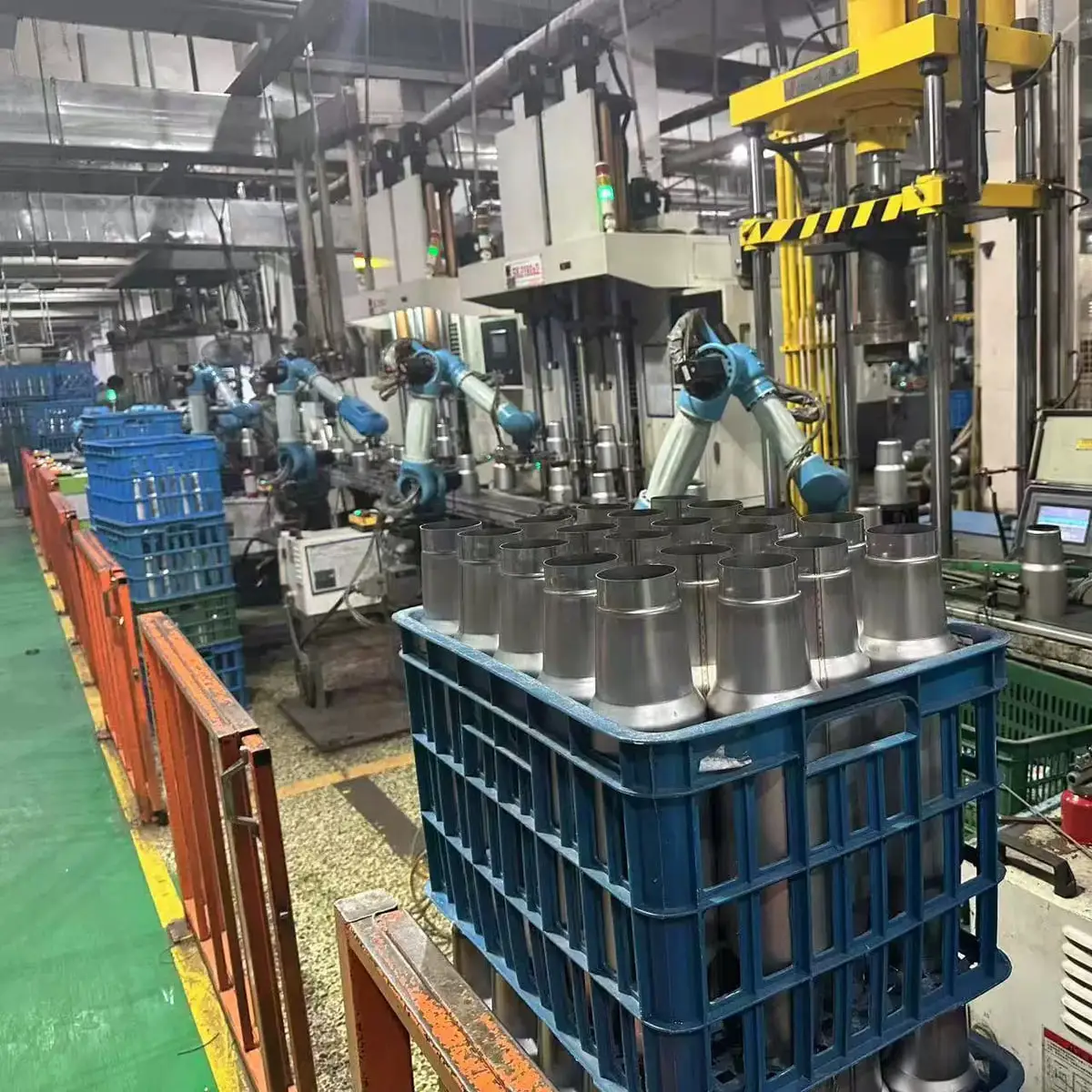
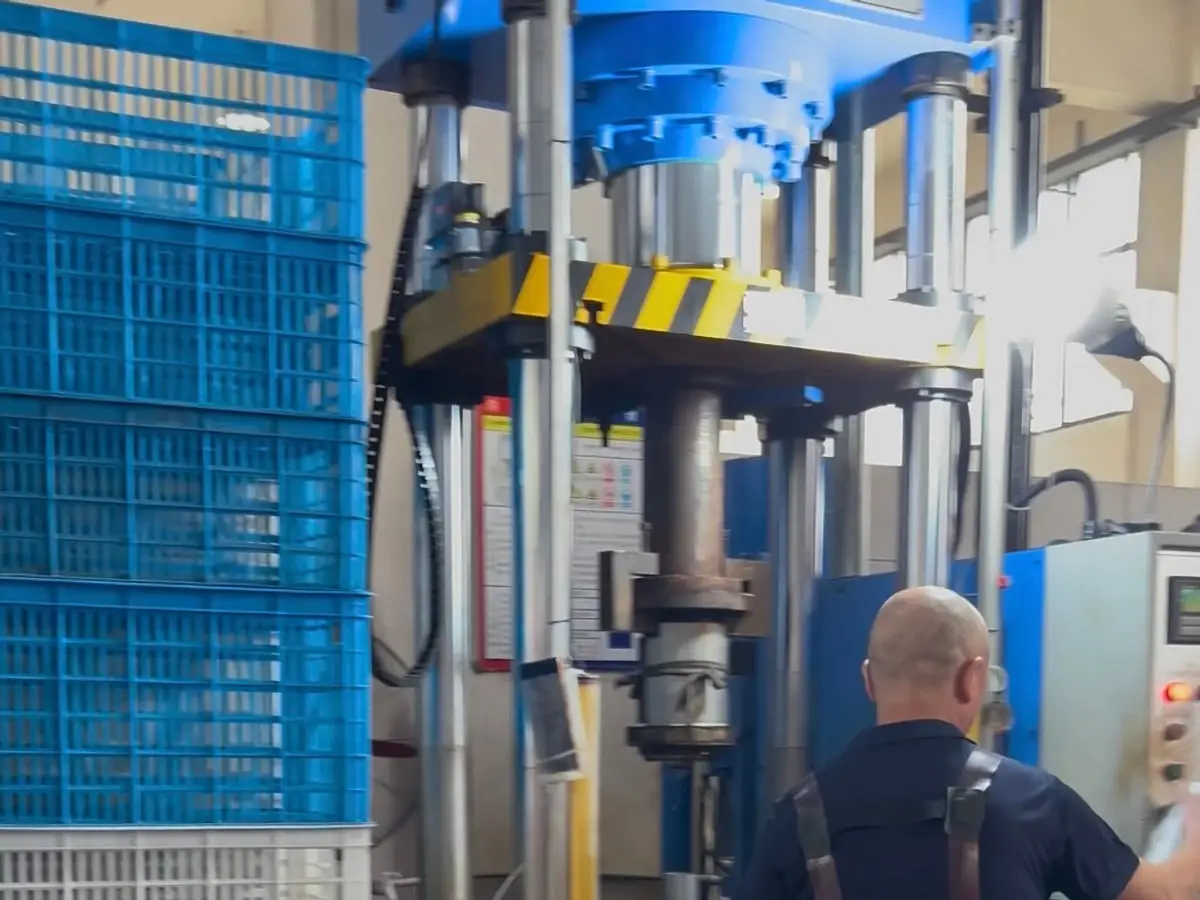
Internal fluid pressure and external tooling help expand or shape the metal body. The route can be useful for geometry that requires material to move into a wider or more complex contour.
- Often associated with a heavier comparable body in Bluegreen's production experience
- Can support particular shoulder and body profiles
- Still requires thickness control by location
- Tooling, pressure path, starting stock, and shape determine the result
Stretch-forming route
Drawing, stretching, and sometimes ironing stages lengthen and shape the body while controlling how the wall is reduced and distributed.
- Can support a lighter comparable body
- Can deliver a more controlled wall profile when the process window is stable
- Has produced better vacuum yield and insulation consistency in relevant Bluegreen programs
- Draw stages, tooling, lubrication, starting stock, and geometry remain decisive
Neither route creates one fixed result. Engineering studies on tube hydroforming and stainless steel cup ironing show that pressure, material properties, geometry, and process settings affect thinning and wall-thickness distribution. Those studies are not drinkware production trials, but they support the basic manufacturing principle: the process name alone cannot predict the finished wall profile.
A wall-thickness specification needs a map, not one number
Forming redistributes metal. The nominal thickness of the starting tube or blank is therefore not the same as the finished thickness at every point. If a purchase order contains only one wall-thickness value, the buyer and factory may be discussing different measurement locations.
For a double-wall insulated tumbler, record the inner and outer body separately where the design and measurement method allow. Also separate body-only weight from the finished set weight that includes the lid, straw, handle, silicone parts, and packaging. Otherwise, an accessory change can be mistaken for a forming change.
A useful production record identifies the model, material grade, starting-stock specification, tooling version, measurement locations, instrument, sample quantity, target, tolerance, lot, and result. If the product changes height during trimming, also review the causes in our tumbler height variation guide.
Why a heavier tumbler is not automatically a better-insulated tumbler
“This tumbler is heavier, so it must keep drinks hot longer.”
Weight can reflect wall thickness, geometry, base construction, handle, lid, or accessories. Thermal performance also depends on vacuum integrity, heat paths through the structure, closure design, workmanship, and the agreed test method.
A heavier cup may provide a particular hand feel, structural margin, or market positioning. It may also increase metal input and shipping weight. Those can be valid product decisions, but weight is not a substitute for an insulation test.
Conversely, a lighter stretch-formed body is not automatically weak or superior. Its acceptability depends on minimum thickness at critical locations, dent resistance expectations, welding and base construction, the complete insulated assembly, and the intended use. Buyers should specify the weight window and functional acceptance they need rather than ask for the heaviest possible body.
For material selection, keep forming performance separate from steel grade. The 304 vs 316 stainless steel water bottle guide explains why corrosion environment and component use—not a simple 'higher grade is always better' rule—should drive the grade decision.
Separate vacuum level, batch vacuum yield, and insulation performance
The phrase “vacuum rate” is often used loosely in sourcing conversations. That creates avoidable disputes because it can refer to three different things. Bluegreen uses the factory observation in this article to mean batch vacuum yield or pass rate—not a claim that every stretch-formed cup has a universally higher vacuum level.
Vacuum level
The pressure condition in the cavity of an individual double-wall body, measured or inferred by the agreed production method.
Vacuum yield
The share of units in a defined lot that passes the agreed vacuum or insulation acceptance after production.
Insulation performance
The temperature-retention result of a finished product under a defined fill volume, starting temperature, duration, ambient condition, lid state, and measurement method.
A sample can show that one unit meets a thermal target. It cannot by itself prove that the production lot has a stable vacuum yield. Likewise, a batch pass rate is meaningful only when the test method, threshold, sample plan or 100% screening rule, hold time, and retest policy are documented.
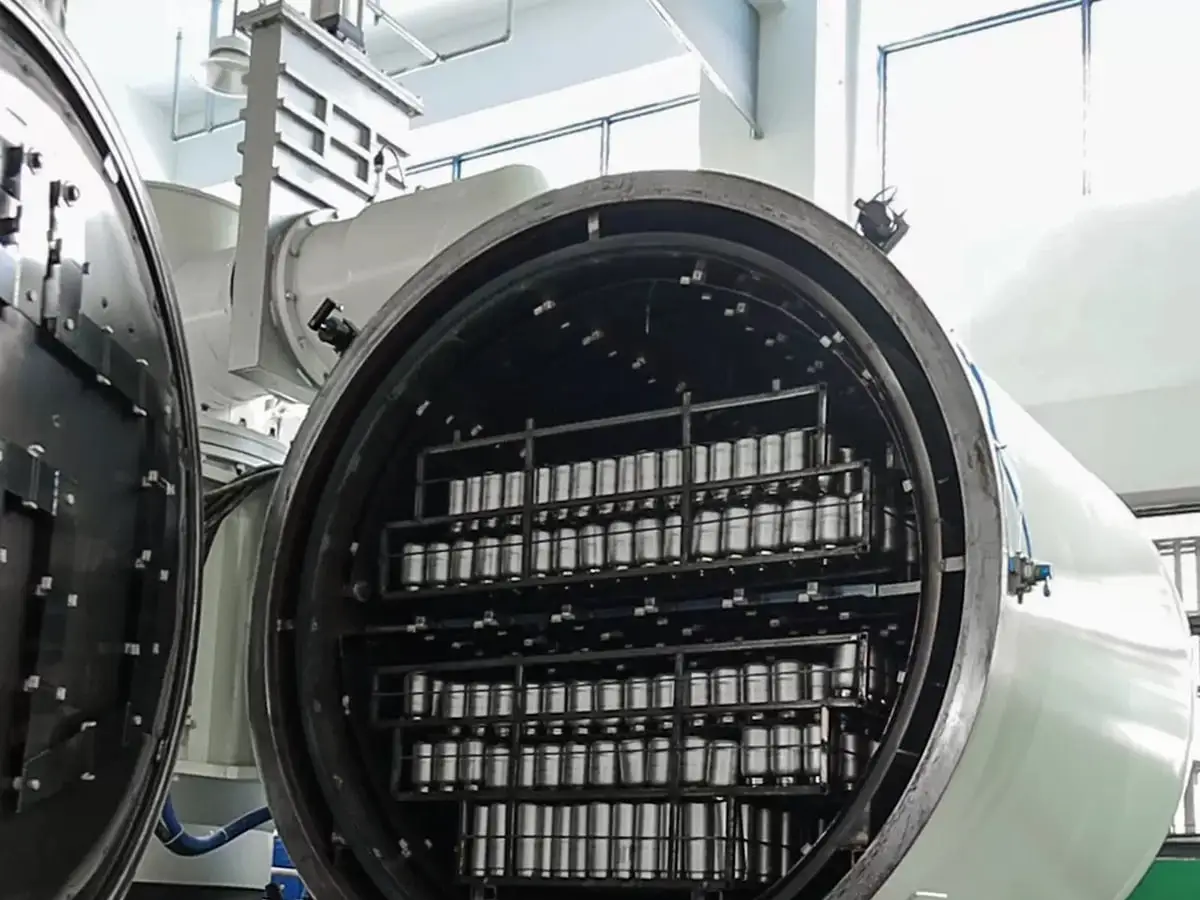
In Bluegreen's experience, relevant stretch-formed programs can achieve better vacuum yield and more consistent insulation. This may reflect the complete controlled process—not forming in isolation. Body geometry, thickness distribution, weld and base condition, cleaning, evacuation, sealing, handling, and inspection all contribute to the finished result.
Choose the route by product goal, then verify it with data
A buyer does not need to prescribe the factory's equipment without understanding the model. A better approach is to state the commercial and functional target, ask the manufacturer which route it proposes, and require comparable evidence from the selected process.
Lower finished weight
Define body-only and complete-product weight windows, plus minimum wall thickness at critical locations.
Stretch forming may fitFuller or complex geometry
Send the drawing and identify the shoulder, transition, and diameter features that must be held.
Hydroforming may fitStable vacuum yield
Review actual lot-level acceptance data, process controls, and failure analysis for the proposed model.
Verify the complete processTarget price and logistics
Compare tooling, material input, cycle time, yield, unit weight, carton load, and freight—not forming cost alone.
Calculate landed impactThe labels above are starting hypotheses, not automatic approvals. A hydroformed model may still be optimized for weight, and a stretch-formed model may not suit every contour. The supplier should show that the proposed combination of route, tooling, starting material, and controls can produce the agreed finished specification.
Weight also changes carton and container efficiency. If two tumblers have the same advertised capacity but different body dimensions or mass, use the same-capacity tumbler shipping-cost guide to compare the logistics effect.
What data should a supplier provide for a fair comparison?
Do not compare one hydroformed model and one stretch-formed model unless the capacity, material, inner and outer structure, mouth size, overall shape, lid, and test conditions are sufficiently comparable. Otherwise, the result may come from the design difference rather than the forming route.
Ask for actual values from the relevant model and lot rather than a generic factory brochure. When a supplier cannot disclose process-sensitive details, it should still be able to provide the finished specification, test method, acceptance record, and traceable change control needed for a purchase decision.
Include these requirements before quotation by adapting the custom drinkware RFQ checklist. Then carry the approved items into the inspection plan using the custom drinkware quality-control guide.
How the forming route can change cost and lead time
The process affects cost through more than machine time. Starting-stock weight, tooling complexity, number of forming stages, lubricant and cleaning requirements, operator input, cycle time, trimming, intermediate inspection, rejection and reprocessing risk, and the number of units that reach final acceptance all matter.
A heavier hydroformed body can increase metal input and outbound weight. A stretch-formed route may require its own tooling and staged process control. Either route can become expensive if the geometry pushes the process outside a stable window or if the specification demands unnecessarily tight tolerances at noncritical locations.
Compare cost per conforming unit, not the quoted forming operation in isolation. The custom tumbler cost breakdown shows how material, decoration, quality, packaging, and order terms combine in a bulk quotation.
Bluegreen's MOQ is model-specific. Typical production lead time is approximately 7–35 days depending on product, quantity, customization, validation requirements, and the confirmed production plan. Forming-route changes can require new samples or tooling review, so confirm the schedule for the actual model.
How Bluegreen reviews hydroforming and stretch-forming projects
Bluegreen manufactures stainless steel, plastic, and titanium drinkware. For a stainless steel tumbler program, the team starts with intended use, target market, capacity, shape, material, construction, weight window, wall-thickness locations, insulation requirement, quantity, packaging, and target delivery date.
The proposed forming route is then reviewed with the actual model and tooling. A sample should confirm geometry, weight, critical thickness points, assembly, finish, and insulation under the agreed method. Before bulk production, those requirements must be converted into records and acceptance criteria that can be applied to the lot.
The purpose is not to sell hydroforming or stretch forming as a premium label. It is to choose a stable route that can repeatedly produce the required product. Where Bluegreen's prior experience suggests that a stretch-formed design can improve vacuum yield and insulation consistency, that advantage still has to be confirmed for the new model. Where hydroforming supports the required shape or body construction, its weight and thickness distribution must be evaluated against the buyer's target.
For a process review, send the drawing or reference product, capacity, dimensions, material, body-only weight target, critical wall-thickness points, insulation test, quantity, target market, packaging, and schedule through Bluegreen's custom drinkware development process.
Frequently asked questions
What is hydroforming in stainless steel tumbler production?
Hydroforming uses internal fluid pressure together with tooling to expand or shape a metal body. The exact sequence varies by model and equipment. For buyers, the important outputs are the finished geometry, body weight, wall-thickness distribution, yield, and functional performance—not the process label alone.
Are hydroformed stainless steel tumblers always heavier?
No universal rule applies. In Bluegreen's factory experience, a hydroformed body is commonly heavier when capacity, material, and general structure are comparable. Starting stock, tooling, geometry, target thickness, and later processing can change the result, so compare actual body-only weights and tolerances for the proposed models.
Does a heavier insulated tumbler keep drinks hot longer?
Not automatically. Weight may come from wall thickness, geometry, the base, handle, lid, or other parts. Insulation also depends on vacuum integrity, structural heat paths, closure design, workmanship, and the test method. Specify and test thermal performance directly instead of using weight as a proxy.
Why can stretch forming improve vacuum yield?
In relevant Bluegreen production programs, a controlled stretch-forming route has delivered better batch vacuum yield and insulation consistency. This is a complete-process observation rather than proof that stretching alone creates a better vacuum. Thickness distribution, geometry, weld and base condition, evacuation, sealing, handling, and inspection also affect the result.
What wall thickness should a buyer specify for a tumbler?
There is no single value that fits every capacity, material, shape, structure, and use. Define measurement locations such as the rim, shoulder, upper, middle and lower sidewall, and base transition; then agree on targets, tolerances, method, sample plan, and functional checks with the manufacturer.
What should buyers compare before choosing hydroforming or stretch forming?
Compare equivalent product baselines, body-only weight, finished weight, wall-thickness distribution, geometry, vacuum acceptance method, batch yield, insulation test conditions, tooling, expected production yield, lead time, packaging, and landed cost. Request records from the relevant model rather than generic process claims.
References and further reading
- Effects of process parameters and material properties on deformation process in tube hydroforming — Supports the general relationship between hydroforming parameters, material properties, deformation, and wall-thickness distribution; it is not a drinkware production study.
- Experimental and numerical study of the ironing of stainless steel cups — Examines stainless steel cup ironing and the thinning and lengthening of cup walls; it does not establish a vacuum-tumbler yield comparison.
- Bending-hydraulic forming stainless steel thin-walled tube fittings wall thickness distribution law research — Shows how pressure and geometry can affect thickness distribution in stainless steel hydraulic forming; the application is not drinkware.
- Analysis of Deep Drawing Behavior of 2507 Super Duplex Stainless Steel in Different Conditions — Provides additional engineering context on thickness change during deep drawing; the alloy and application differ from a consumer tumbler.
Compare the finished specification before choosing the forming route
Send the model, capacity, material, body-weight target, critical wall-thickness points, insulation test, quantity, target market, packaging, and delivery requirement. Bluegreen can review the appropriate forming and verification plan.
This guide provides general B2B sourcing information, not legal or laboratory advice. Confirm market-specific requirements, test methods, and acceptance criteria with qualified professionals before production.



 English
 German
 French
 Russian
 Spanish
 Japanese
 Korean
 Portuguese
 Ukrainian
 Arabic
 Italian

Leave A Comment