
Factory Decision Guide for Custom Drinkware
Rework vs Remake for Custom Tumblers: Why Removing Coatings and Logos Can Create New Defects
A lower apparent recovery cost does not always produce the most predictable shipment. See what changes after a finished tumbler is stripped, polished, coated and decorated again.
Short answer
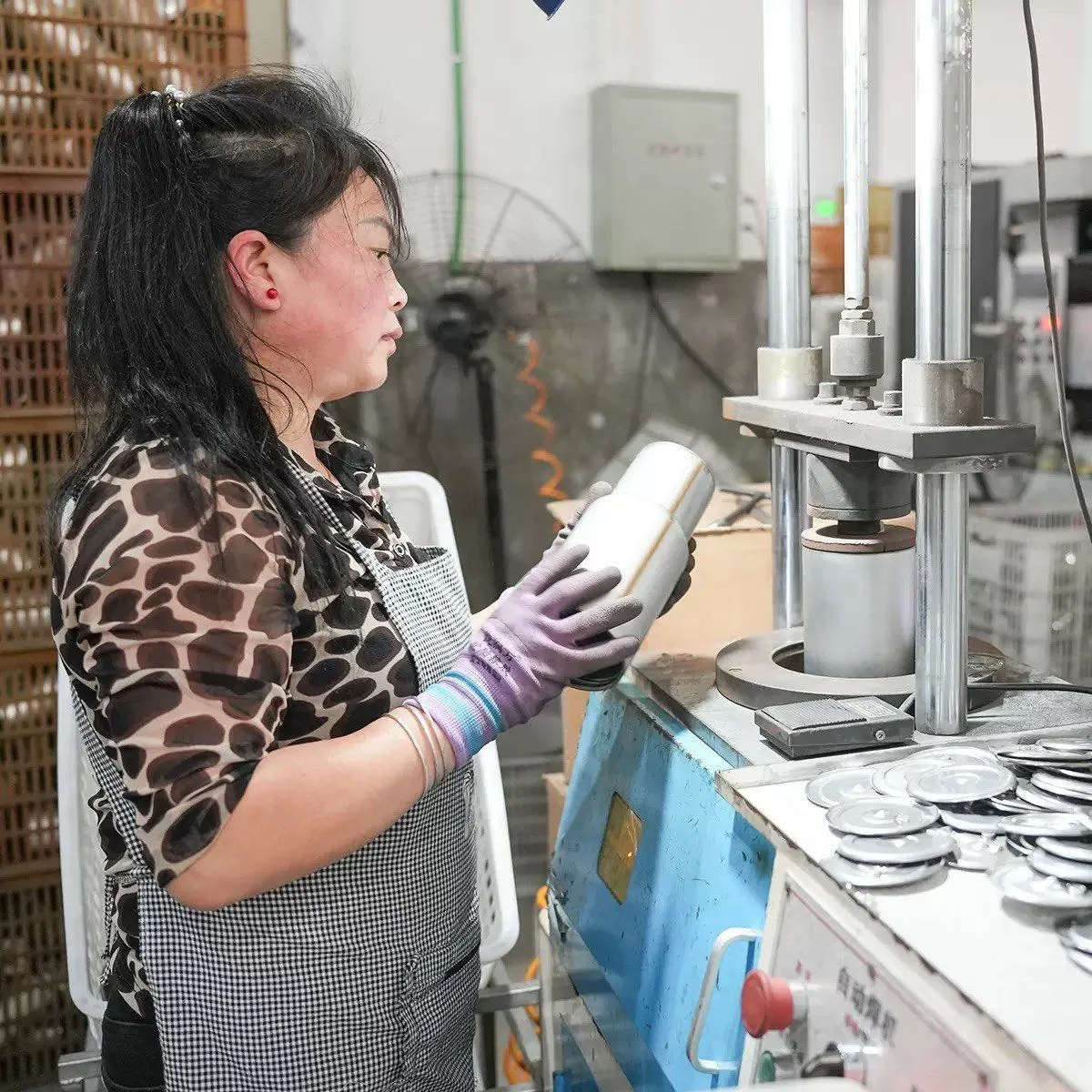
Bluegreen may remake a customized tumbler batch when correcting the defect would require stripping the coating or plastic layer, sanding or polishing the body, applying a new finish, reproducing the logo and inspecting the product again. Each added operation changes the controlled condition established during the original production run.
Rework does not automatically make a vacuum tumbler leak or make a titanium cup unusable. The concern is predictability: the recovered surface, color, gloss, texture, logo position and functional performance can become harder to keep uniform. The right decision compares the expected number of conforming units, the checks required and the delivery risk—not the apparent salvage rate alone.
The same defect can lead to two very different production routes
When a logo, coating color or surface finish is rejected, the visible defect is only the starting point. The factory must decide whether the affected unit can return to a stable production baseline or whether every recovery step will introduce another variable.
Remake route
- Prepare a new cup body
- Apply the specified surface treatment
- Apply the approved coating or finish
- Reproduce the approved logo
- Inspect against the current standard
Rework route
- Sort and isolate affected units
- Remove the coating, print or plastic layer
- Clean, sand or polish the exposed surface
- Refinish and cure the body
- Reproduce the logo
- Repeat appearance and functional checks
The remake route repeats a controlled process on a new substrate. The rework route first has to undo a finished process. That distinction matters because stripping and polishing are not neutral resets: they can leave a surface with different roughness, cleanliness, geometry or heat history from a new production body.
Why a small logo or color defect can become a larger rework problem
A finished custom tumbler combines the metal body, surface preparation, coating system, curing conditions and decoration. Correcting one layer may require disturbing several others. The practical risk therefore grows as a chain rather than staying limited to the original defect.
A wrong logo, misplaced print, unacceptable color or finish defect is separated from the approved reference.
Chemical, mechanical or combined removal may expose a substrate that no longer matches a new body.
Cleaning, sanding and polishing can change local roughness, edge definition or reflectivity.
Coverage, texture, gloss, cure and color now depend on the recovered surface as well as the new coating cycle.
The factory must check the original defect and any new appearance or functional variation introduced by recovery.
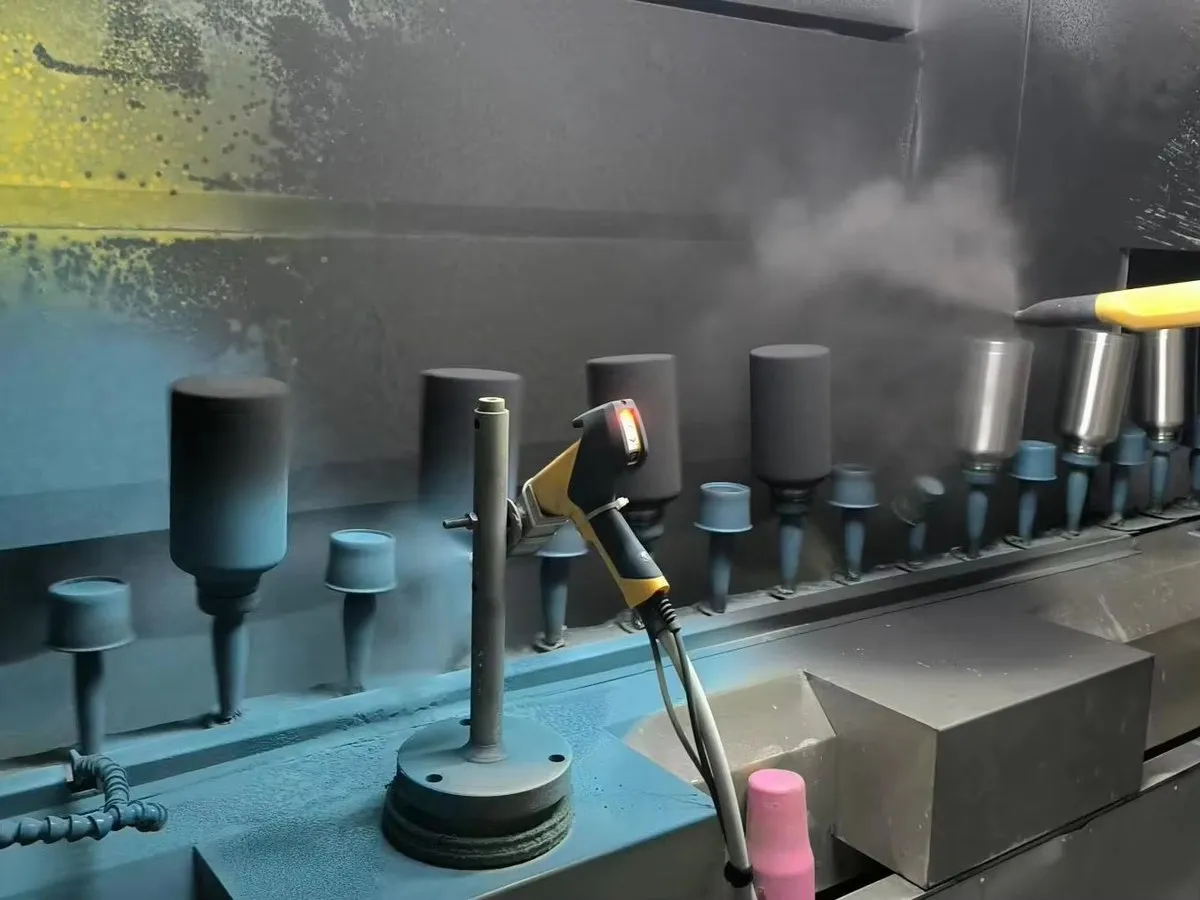
Surface condition is commercially important because coating adhesion depends strongly on the substrate and its preparation. ASTM D3359 specifically notes that substrate and surface preparation affect coating adhesion, while ISO/TR 19402 explains that roughness and film thickness can influence adhesion-test results. Those standards do not decide whether a tumbler should be remade, but they support the underlying control principle: a changed surface needs renewed validation.
Which new defects can appear after stripping, sanding and recoating?
The rework result should be judged against the same acceptance criteria as normal production. Buyers should not approve rework only because the original logo is gone or the obvious color error has been covered.
- Uneven color or shade: variations in the recovered substrate, coating thickness, cure conditions or surrounding batch can make repaired units appear different under the same light.
- Gloss and texture mismatch: local polishing or sanding may change how the new finish reflects light or forms its surface texture.
- Ghost images and witness marks: the outline of a removed logo, print edge or previous coating boundary may remain visible after refinishing.
- Scratches, pits or softened edges: mechanical removal can leave marks that become more visible after a new finish is applied.
- Adhesion variation: contamination, residual coating or inconsistent surface preparation can affect the bond between the new finish and the substrate.
- Mixed-batch appearance: reworked units may meet an individual limit yet still look different when packed beside untouched units from the original batch.
Color acceptance also needs an agreed method. ASTM D2244 states that purchaser and seller should agree on the permissible color tolerance and calculation procedure, and notes that gloss and texture affect commercial acceptance. For a custom tumbler order, that means a numeric color reading should be paired with an approved visual reference and controlled viewing conditions.
If the project has tight appearance requirements, use the custom drinkware color sample approval guide to define the reference before deciding whether recovered units can be mixed with normal production.
Why vacuum-insulated stainless steel and titanium drinkware need different reviews
The same decision rule cannot be applied to every drinkware structure. Material, wall thickness, decoration method and the location of the work determine which checks are relevant.
Vacuum-insulated stainless steel
The main concern is not that coating removal automatically destroys insulation. Risk increases when rework applies excessive heat, impact, pressure or material removal near a thin wall, weld, base assembly or vacuum-sealing area.
Where the process could affect those areas, repeat the agreed leak, vacuum or insulation checks before the units return to the lot.
Titanium drinkware
Titanium surfaces can show differences in texture, oxide condition and reflectivity after local polishing. A thin-wall titanium body can also be less forgiving of aggressive mechanical work.
Laser engraving removes or alters the surface and cannot simply be erased like a detachable label. A deeper mark may require enough polishing to change the visible contour or wall condition.
Rework does not automatically reduce the vacuum rate, and a refinished titanium cup is not automatically defective. The factory should identify the affected structure, define the rework method and repeat the checks that the method could reasonably influence.
For material and component records on stainless steel, plastic and titanium programs, see the food-contact materials guide for custom drinkware.
When should a factory rework the batch, and when is a remake more predictable?
No single defect name decides the route. A wrong label and a wrong laser-engraved logo may both be called a branding error, but the recovery work is completely different. Use the following zones as a review framework rather than a universal acceptance rule.
Independent packing, label or removable-accessory problems.
The product body and approved finish remain untouched, and the replacement can be verified without reopening a structural process.
Limited removable decoration or a small, isolated finish issue.
Trial the exact removal and refinishing method on representative units, then compare appearance and function against the approved standard before authorizing the lot.
Full coating removal, widespread logo errors, deep laser engraving, strict batch color matching or work near a sensitive structural area.
The accumulated reprocessing and inspection uncertainty may exceed the cost and schedule risk of making new bodies.
Quantity also changes the decision. A technically possible rework method may be unsuitable for a large lot if it is highly operator-dependent, slow to inspect or likely to produce variable yield. Conversely, a small number of isolated units may be corrected safely without disturbing the rest of the batch.
Before making the choice, compare the current product against the signed reference and change record. Our guide on controlling changes after tumbler sample approval explains how to keep the approved version clear.
Why the apparent rework cost is not the full cost
Rework can look cheaper because the cup body already exists. That comparison is incomplete unless it includes the labor, yield uncertainty, additional inspection and potential delivery consequences created by recovery.
The visible calculation
Removal labor + refinishing material + logo reproduction
The costs that are easy to miss
Sorting, isolation, movement between processes, cleaning, sanding or polishing, repeat curing, appearance matching, functional retesting, extra rejects, mixed-batch review, repacking, schedule disruption and complaint exposure.
The important output is not how many pieces enter the rework process. It is how many units exit as conforming, traceable and visually consistent products by the required shipment date. A high theoretical recovery rate is not useful if the final yield remains unpredictable.
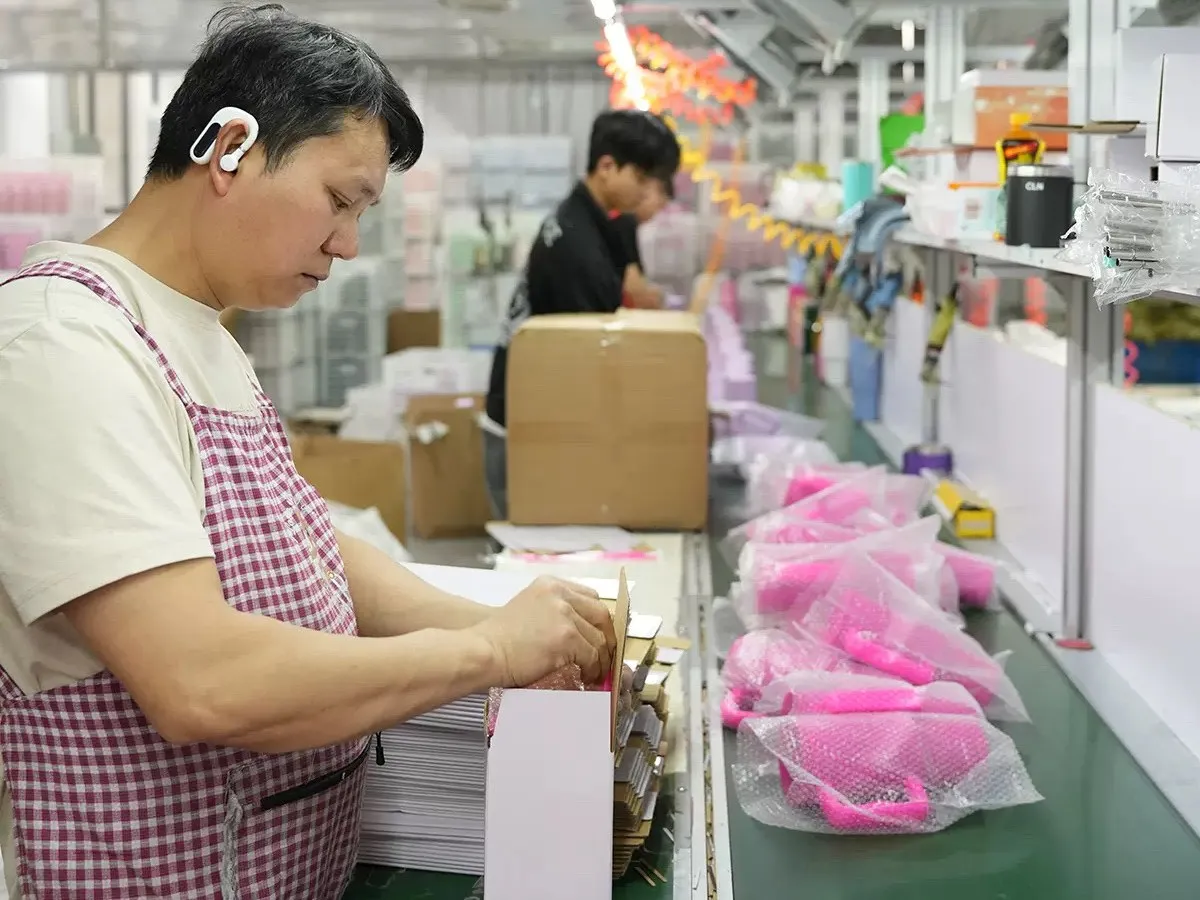
For a broader explanation of tooling, decoration, packaging, quality and schedule inputs, review the custom tumbler price breakdown.
What should buyers confirm before approving a rework plan?
A buyer should receive a defined recovery plan rather than a general promise that the factory will “fix” the goods. Procurement, QA and the product owner need enough information to understand what will be changed and how the recovered lot will be accepted.
If the factory cannot describe the process, trial, acceptance criteria and failed-unit plan, the buyer cannot meaningfully approve the risk. Add these fields to the custom drinkware RFQ and production record before work begins.
Approve a rework method only after you know what will be removed, what may be changed, what will be retested and how an unsuccessful unit will be replaced.Buyer decision rule
How Bluegreen approaches a rework-or-remake decision
Bluegreen manufactures stainless steel, plastic and titanium drinkware. When a customized batch has a coating or logo problem, the team reviews the defect scope together with the product structure, finish, decoration method, affected quantity, acceptance standard and delivery plan.
The aim is not to refuse rework by default. It is to avoid turning one known defect into several less predictable defects. If a controlled trial shows that the surface and function can be restored consistently, a limited rework route may be practical. If the process requires broad stripping, aggressive polishing or repeated treatment with uncertain yield, making new bodies may provide a clearer route to conforming goods.
MOQ is model-specific, and typical production lead time is approximately 7–35 days depending on the product, quantity, customization, validation requirements and confirmed production plan. A remake or rework decision can change that schedule, so timing should be confirmed for the actual batch rather than assumed from a standard range.
To review a project, send the model, material, product structure, finish, logo process, artwork, quantity, affected units, photos, approved reference and required delivery date through Bluegreen's custom drinkware process.
Frequently asked questions
Can a logo be removed from a powder-coated tumbler?
Sometimes, but removal is not automatically a clean reset. Depending on the logo and coating system, the factory may need to strip the finish, clean the body, sand or polish the surface, recoat it and apply the logo again. Trial the process on representative units and approve appearance, adhesion and any affected functional checks before treating the batch.
Does reworking an insulated tumbler always damage the vacuum?
No. Surface rework does not automatically damage the vacuum. The risk depends on the method, heat, force, material removal and proximity to thin walls, welds, the base assembly or vacuum-sealing areas. If the recovery process could influence those features, repeat the agreed leak, insulation or vacuum checks before acceptance.
Why can a recoated tumbler have a different color from the original batch?
The recovered substrate may differ in roughness, reflectivity, cleanliness or remaining finish, while the second coating cycle can differ in thickness and cure conditions. Gloss and texture also affect perceived color. Compare recovered units with the approved reference under agreed lighting and use an agreed instrumental tolerance where appropriate.
Can laser engraving on a titanium cup be removed?
A laser mark changes or removes material at the surface, so it cannot be peeled away like a label. Polishing may reduce a shallow mark, but it can leave a visible contour, change the local texture or affect a thin wall. The factory should evaluate mark depth, wall condition and appearance tolerance before choosing rework.
When is remaking a custom tumbler batch more economical than reworking it?
A remake can be more economical when rework requires full coating removal, repeated surface preparation, new decoration, extensive inspection and still has uncertain usable yield. Compare cost per conforming unit and delivery risk, not only the cost of attempting to recover each rejected piece.
What should a buyer approve before tumbler rework starts?
Approve the defect scope, rework method, trial quantity, appearance limits, affected functional tests, expected usable yield, failed-unit replacement plan, mixing rule for reworked and untouched units, inspection records and revised shipment date. A general promise to repair the goods is not a sufficient production instruction.
References and further reading
- ASTM D3359-23 — Standard Test Methods for Rating Adhesion by Tape Test — Explains the role of substrate and surface preparation in coating adhesion and the limits of tape-test evaluation.
- ASTM D2244 — Calculation of Color Tolerances and Color Differences — Provides a framework for instrumentally measured color differences and buyer-seller agreement on tolerance.
- ISO/TR 19402:2018 — Paints and varnishes — Adhesion of coatings — Summarizes coating-adhesion evaluation methods and factors that affect interpretation.
- ISO 8504-1:2019 — Preparation of steel substrates before application of paints — Describes general principles for selecting and specifying steel-surface preparation methods.
Review the recovery route before authorizing the batch
Send the product structure, finish, logo method, affected quantity, photos, approved reference and delivery target. Bluegreen can review whether a controlled rework trial or a remake offers the more predictable route.
This guide provides general B2B sourcing information, not legal or laboratory advice. Confirm market-specific requirements, test methods, and acceptance criteria with qualified professionals before production.


 English
 German
 French
 Russian
 Spanish
 Japanese
 Korean
 Portuguese
 Ukrainian
 Arabic
 Italian

Leave A Comment