
Stainless Steel Tumbler Weight Guide for B2B Buyers
Why Same-Capacity Stainless Steel Tumblers Have Different Weights
Two tumblers can hold the same volume and still differ in weight because capacity does not define the forming route, body construction, base, lid, handle, gasket, or accessory set. A heavier cup may feel more substantial, but weight alone does not prove better vacuum insulation or production quality.
Short answer
Same-capacity stainless steel tumblers can have different weights because capacity measures internal volume, not how much material and hardware the complete product contains. Body-forming route, inner and outer shells, base construction, lid, handle, gasket, straw, silicone parts, and decorative components can all change the final reading.
A heavier tumbler is not automatically better insulated. In Bluegreen's experience, hydroformed bodies are often heavier, while relevant stretch-formed programs can achieve better vacuum pass consistency and thermal performance. Approve body weight, complete-set weight, configuration, and performance as separate specifications.
What does a stainless steel tumbler's listed weight actually include?
A finished tumbler weight normally describes the complete configured unit, not only the stainless steel shell. If two suppliers use different lids, handles, bottom covers, gaskets, straws, or silicone parts, their products can show different scale readings even when nominal capacity and basic body shape appear similar.
Forming route, geometry, base transition, and starting material determine much of the metal mass.
A base plate, bottom cap, pad, or decorative ring changes weight without changing capacity.
Plastic mass, sliders, straws, valves, inserts, and lid insulation all add grams.
Plastic or metal handles, studs, pins, and fasteners affect the final set.
Seals, sleeves, boots, grips, and decorative silicone components should be defined by version.
Surface layers add some weight but should not compensate for an out-of-range metal body.
Ask “Which configuration was weighed?” A useful specification distinguishes the bare body, assembled drinkware unit, and any retail set that includes a straw, brush, sleeve, box, or other accessory.

Why does the same advertised capacity not create the same weight?
Capacity describes how much liquid the product is intended to hold under the agreed method. It does not fix outer diameter, height, shoulder, mouth opening, vacuum gap, base, lid architecture, or material distribution. Two 20 oz or 600 ml products can therefore use different constructions and legitimately weigh different amounts.
One model may use a simple lid while another uses a multi-part straw lid and handle. One may have a silicone boot; another a heavier base. Comparing only capacity and unit price can turn a configuration difference into a false material or quality conclusion.
For quotation, sample approval, and pre-shipment inspection, state whether the target covers the bare metal body, the assembled cup with lid, or the complete retail set. Keep that boundary unchanged.
How do hydroforming and stretch forming affect body weight?
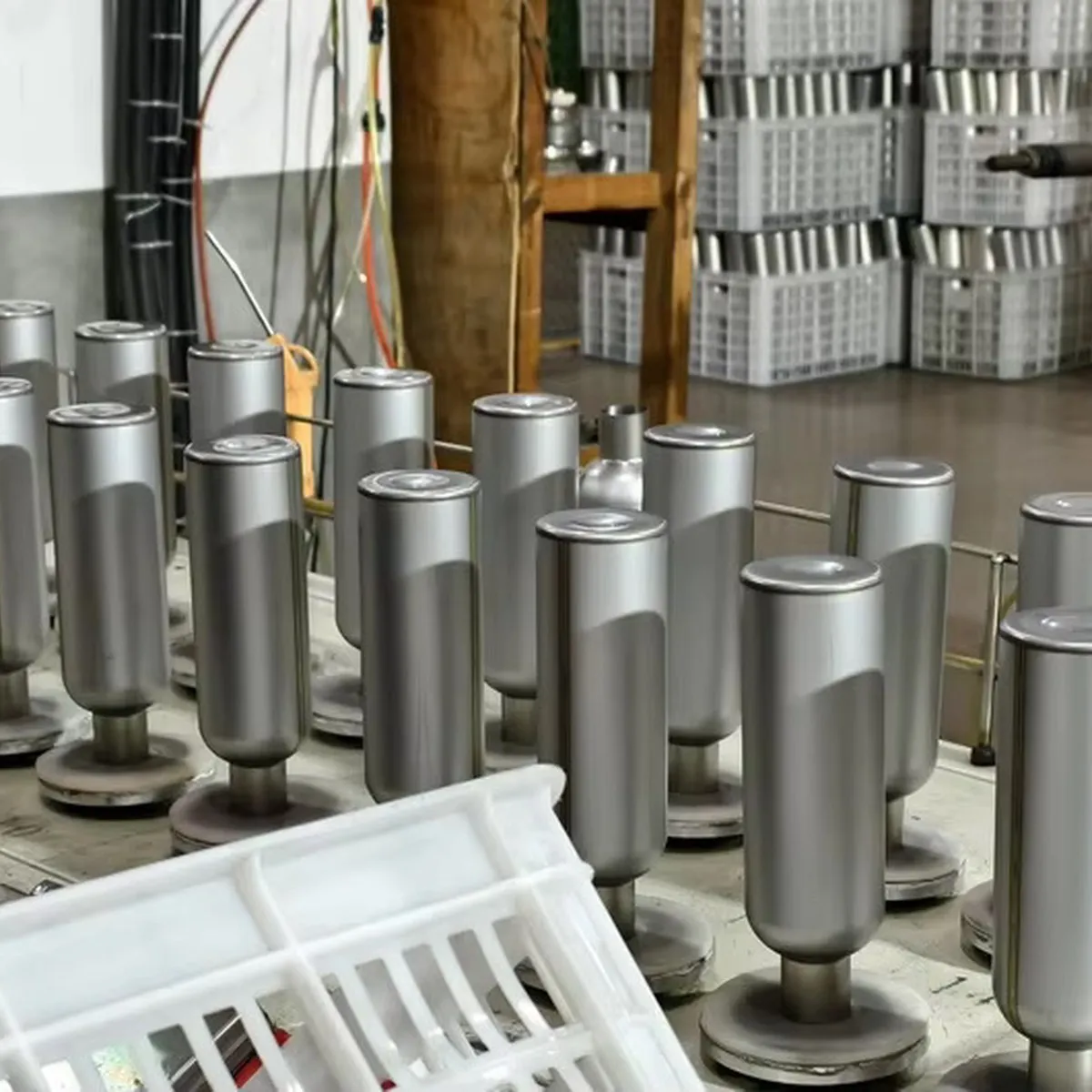
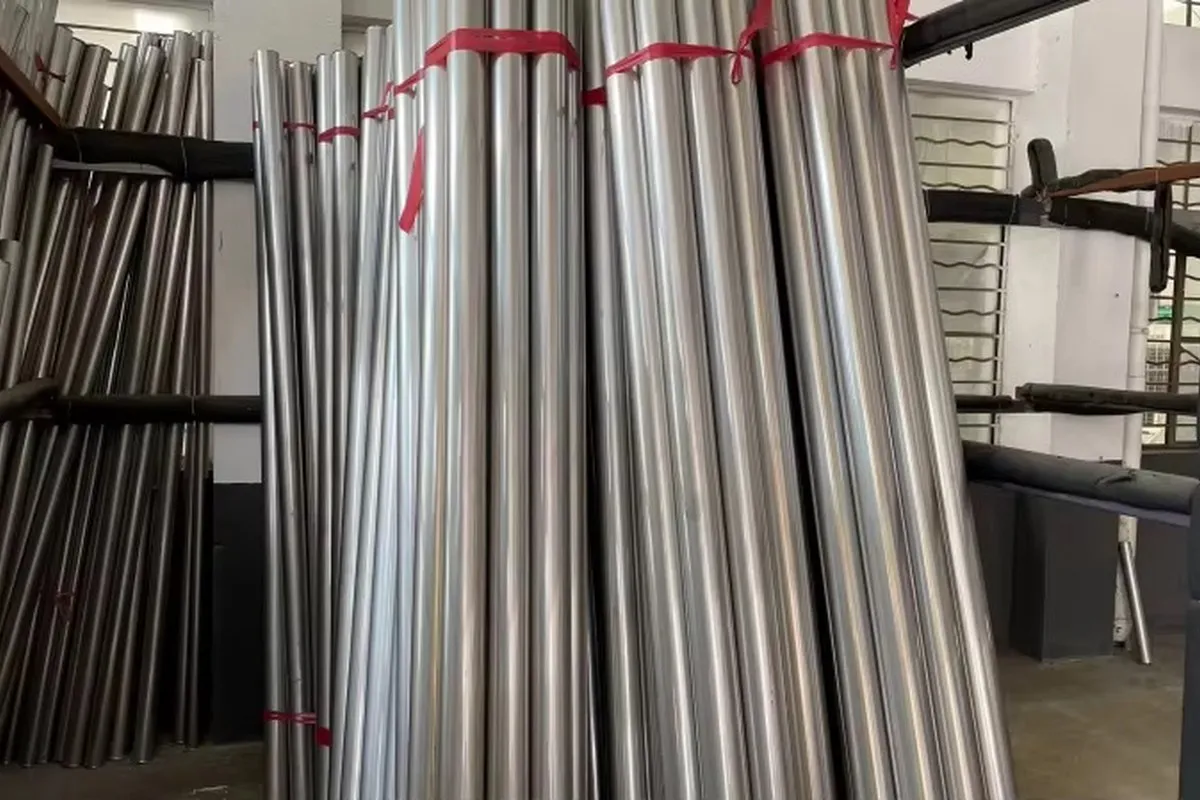
For comparable Bluegreen programs, a hydroformed body is generally heavier because the tube is expanded into shape without the same elongation route used in stretch forming. More of the starting material is retained. Stretch forming redistributes material through controlled deformation and can produce a lighter body for the applicable design.
Often the heavier route
The tube is expanded by internal pressure. In comparable programs, this commonly retains more material and produces a heavier body.
Buyer check: confirm body weight and function for the actual model.
Often the lighter route
Material is elongated and redistributed through the forming sequence. Relevant Bluegreen programs can achieve better vacuum pass consistency and thermal performance.
Buyer check: treat this as a model-specific observation, not a universal guarantee.
The route name cannot approve a product. Tooling, geometry, weld condition, vacuum processing, handling, and inspection still matter. The hydroforming versus stretch-forming guide covers the broader tradeoff; this page focuses on weight.
For the programs discussed here, Bluegreen controls starting material and uses weight plus functional inspection as practical controls. This is not a claim that finished wall thickness is identical at every point or that one thickness number predicts performance.
What do the 303 g and 277 g scale photographs show?
The photographs show two visually matching finished units recorded at 303 g and 277 g. They demonstrate that similar appearance does not guarantee identical finished weight. They do not identify the cause, batch mean, component revision, sample size, calibration status, or thermal result.
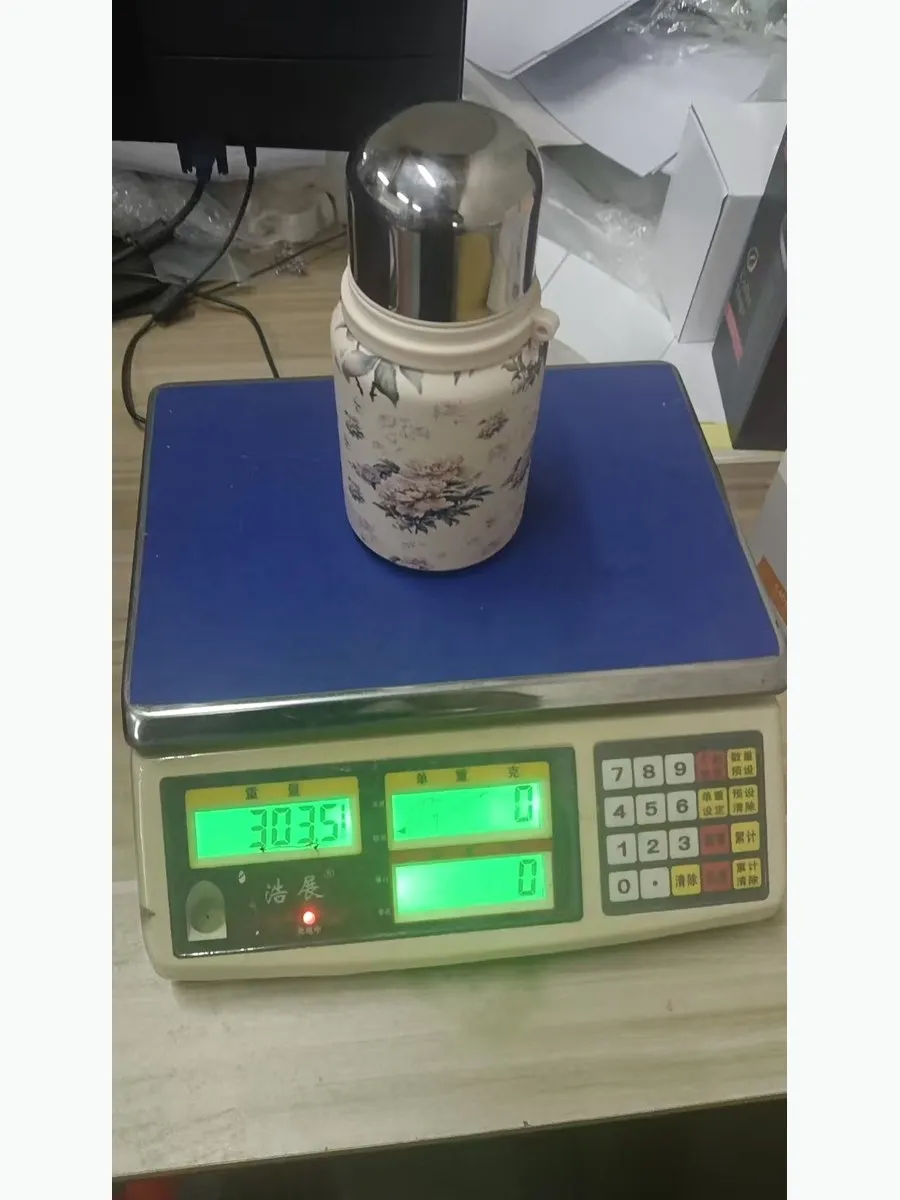
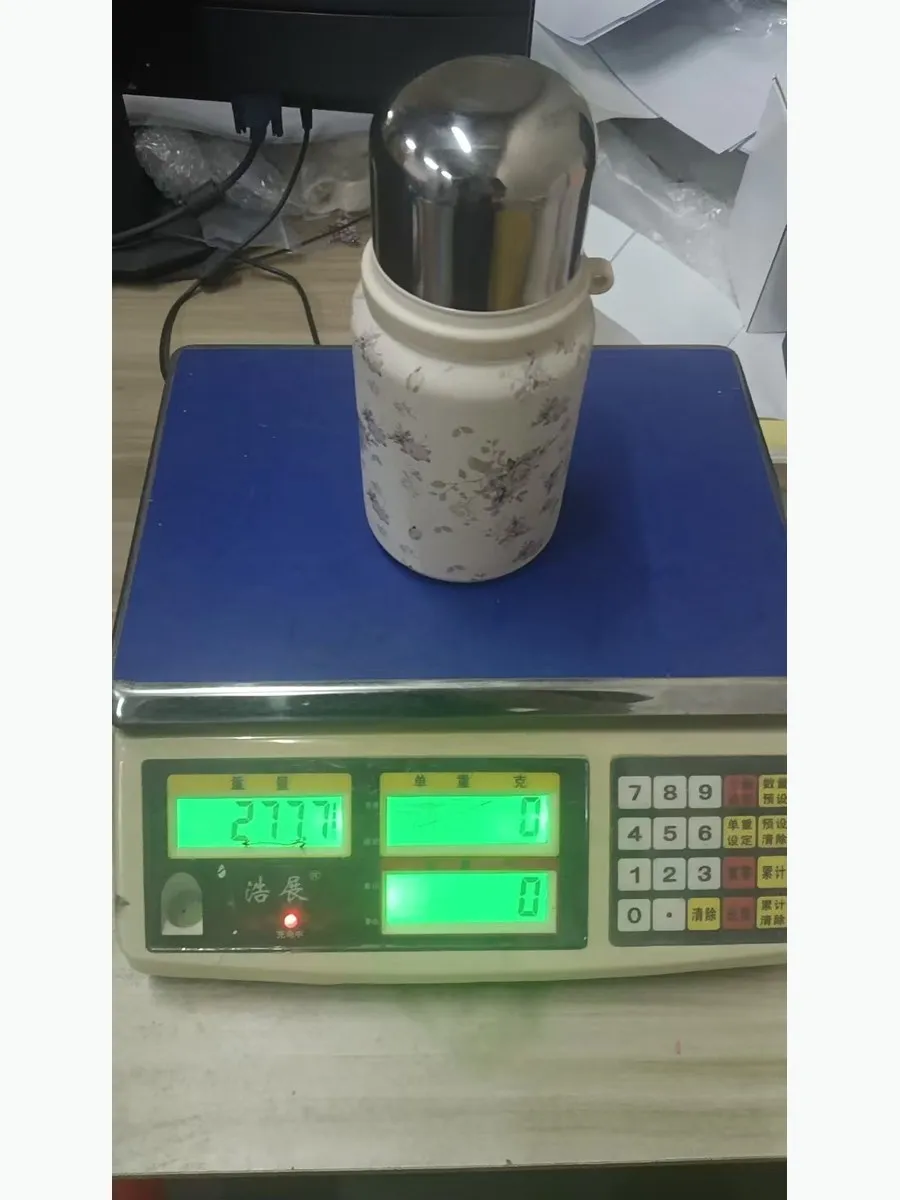
Illustrative arithmetic: the readings differ by 26 g. Their simple midpoint is 290 g, placing each reading about 4.5% from that midpoint. A two-unit midpoint is not the production batch average and must not be used as an acceptance report.
To explain a production difference, compare the approved bill of materials and weigh the bare body and replaceable components separately. Check the lid revision, handle, gasket, straw, base cover, silicone parts, finish, and any retained liquid or packaging before investigating body forming.
A small per-unit difference accumulates across thousands of pieces. Use the same-capacity tumbler shipping-cost guide for the carton and freight side.
Does a heavier stainless steel tumbler perform better?
Not automatically. Extra weight can create a substantial hand feel, but it has limited meaning unless the grams are connected to a defined structural or functional requirement. Total weight alone cannot prove vacuum integrity, heat retention, leakage resistance, coating durability, or lid quality.
“The heavier cup must keep drinks hot longer.”
It does not show where the grams came from, whether the vacuum cavity is sound, how the lid seals, how the product was tested, or whether it matches the approved specification.
In Bluegreen's experience, applicable stretch-formed products can be lighter while achieving better vacuum pass consistency and thermal performance than comparable hydroformed products. That does not make every stretch-formed design superior. Test the function directly rather than use heft as a substitute.
If a brand wants a heavier hand feel, specify it as a positioning decision and review material cost, carton gross weight, shipping, and user comfort. The custom tumbler cost breakdown keeps that separate from performance claims.
How should weight be controlled during bulk production?
For applicable orders, each finished unit is controlled to approximately ±5% around the confirmed batch-average control value. This is an order-specific working range, not an industry standard or a default tolerance for every product. The order must identify configuration, weighing boundary, scale method, sampling plan, and disposition rule.
Record body, lid, handle, gasket, straw, silicone parts, base, and finish revision.
State bare body, assembled cup, or retail set and use the same condition each time.
For applicable orders, compare each finished unit with the confirmed batch-average control value and its approximately ±5% working range.
Reject an out-of-range bare body; correct only replaceable parts when permitted.
An out-of-range bare cup body is rejected and removed from the production lot; only approved replaceable components may be corrected or replaced and rechecked.
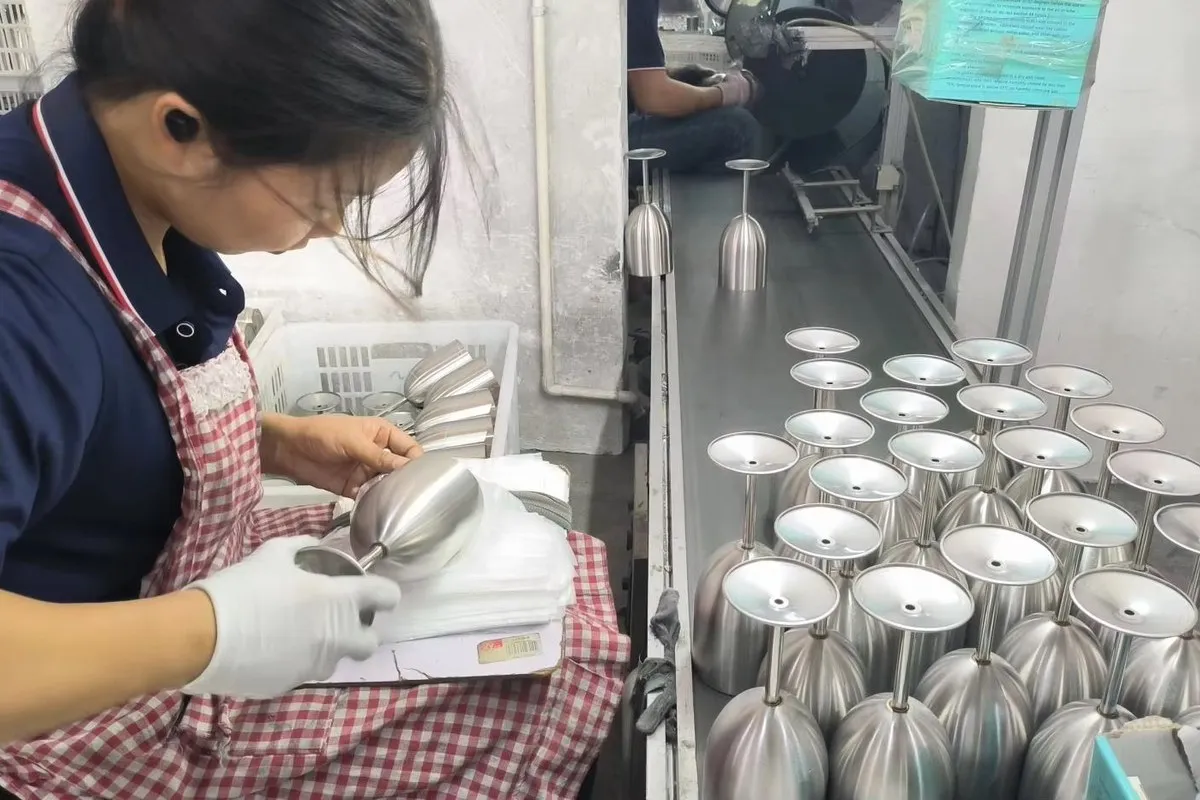
Weight is one inspection item. Connect it with configuration, appearance, assembly, leakage, vacuum or thermal checks, and packaging. Bluegreen's drinkware quality-control process gives the broader context.
What should buyers put in the RFQ and approved sample record?
Specify weight as a controlled product attribute, not a catalog number copied into a purchase order. Make every supplier weigh the same configuration and separate body weight from finished-set weight.
Photograph the approved configuration, record its actual weight, and list every installed part. If a lid or handle changes, repeat the complete-set weight check and decide whether the control value must change.
Submit the reference product, capacity, body and finished weight, component list, insulation requirement, quantity, target market, packaging, and delivery requirement through Bluegreen's custom drinkware development process.
The practical buyer decision: approve the product, not the feeling of heft
Use weight to control repeatability, detect a wrong component or body, estimate logistics, and maintain a consistent customer experience. Do not use it as a shortcut for material grade or insulation. Those claims need their own specifications and verification.
This gives procurement a comparable quotation, QA a usable inspection rule, and product teams a clear reason for choosing a lighter or heavier construction. It also prevents extra grams added only for hand feel from being marketed as technical performance.
Frequently asked questions
Why do two 20 oz stainless steel tumblers have different weights?
The 20 oz label describes capacity, not the complete construction. Body-forming route, shells, base, lid, handle, gasket, straw, silicone parts, finish, and accessories can change the scale reading. Compare the same configuration and weighing boundary before treating the difference as a quality issue.
Is a heavier stainless steel tumbler better quality?
Not by weight alone. Extra grams may improve hand feel or come from a heavier lid, handle, base, or body, but they do not prove material grade, vacuum integrity, heat retention, leakage resistance, or coating durability. Define and test each required performance separately.
How can forming route affect tumbler weight and insulation?
In comparable Bluegreen programs, hydroformed bodies are generally heavier because the tube is expanded without the same elongation route used in stretch forming. Relevant stretch-formed programs can be lighter while achieving better vacuum pass consistency and thermal performance. These are model-specific factory observations, not universal guarantees; starting material, geometry, tooling, weld condition, vacuum processing, sealing, lid design, and the test method also matter.
What tumbler weight tolerance should a buyer use?
There is no universal tolerance for every model. For applicable Bluegreen orders, each finished unit is controlled to approximately ±5% around the confirmed batch-average control value. This is an order-specific working range, not an industry standard. The purchase specification should also define configuration, weighing boundary, scale method, sampling plan, and disposition.
Can an overweight or underweight tumbler body be reworked?
An out-of-range bare cup body is rejected and removed from the production lot; only approved replaceable components may be corrected or replaced and rechecked.
Define the weight before comparing stainless steel tumbler quotes
Send the model or reference product, capacity, body and finished-set weight targets, lid and handle configuration, forming preference if any, insulation requirement, quantity, packaging, target market, and delivery date. Bluegreen can review the specification before sampling.
This guide provides general B2B sourcing information, not legal or laboratory advice. Confirm market-specific requirements, test methods, and acceptance criteria with qualified professionals before production.



 English
 German
 French
 Russian
 Spanish
 Japanese
 Korean
 Portuguese
 Ukrainian
 Arabic
 Italian

Leave A Comment